

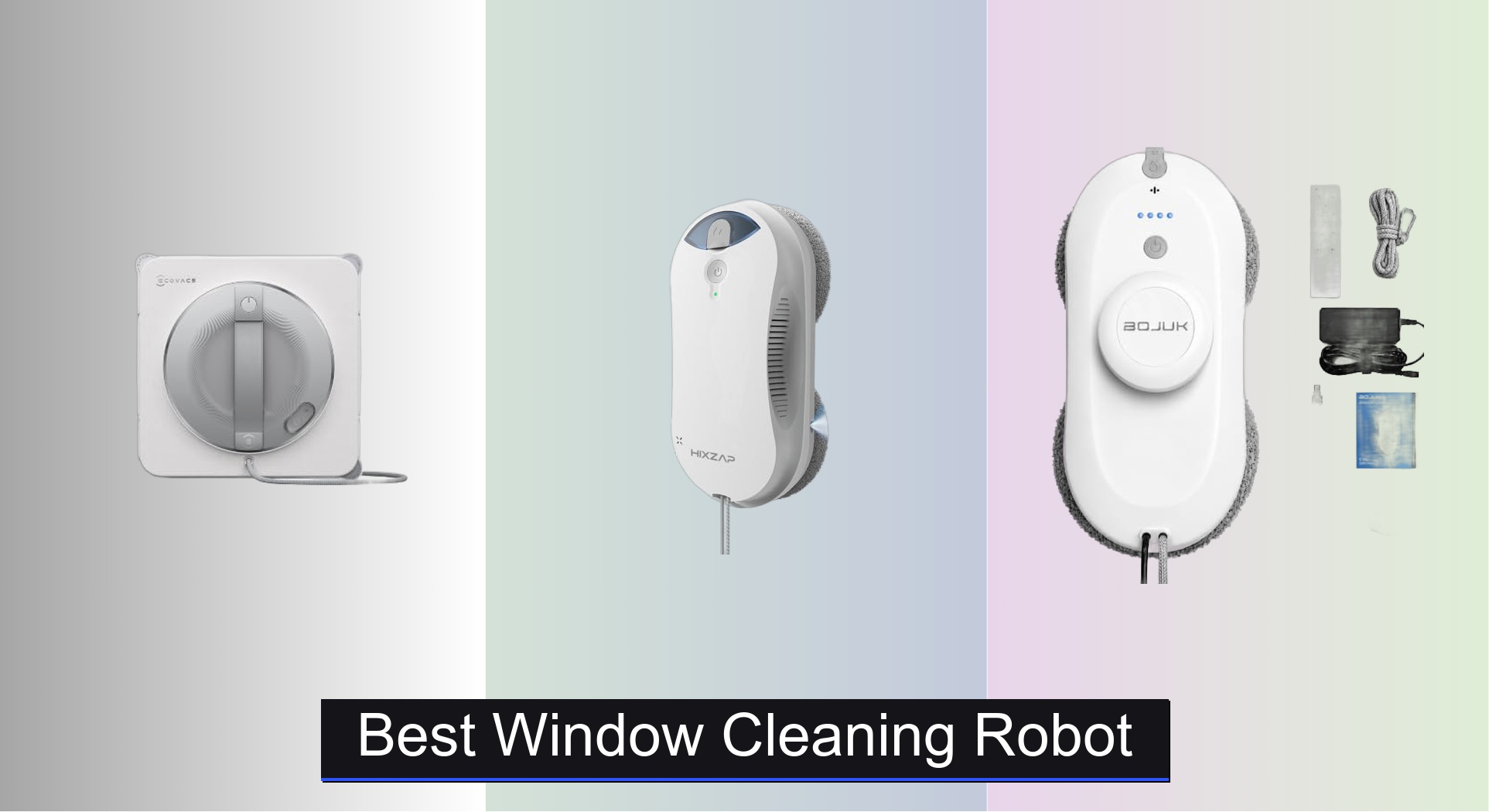
Cleaning tall, hard-to-reach windows by hand is a tedious, risky chore that often leaves streaks and smudges behind. The best window cleaning robots solve this with powerful suction, intelligent navigation, and efficient spray systems that deliver spotless, streak-free results without the danger of ladders or the hassle of manual scrubbing. We evaluated top models based on suction strength, safety features like tethers and UPS backup, cleaning performance, smart navigation, and real-world user feedback to identify the most reliable, effective options across every price range. Below are our top picks for the best window cleaning robots that combine performance, safety, and value.
Top 8 Window Cleaning Robot in the Market
Best Window Cleaning Robot Review
HUTT H10 Window Cleaning Robot
ADVANTAGES
LIMITATIONS
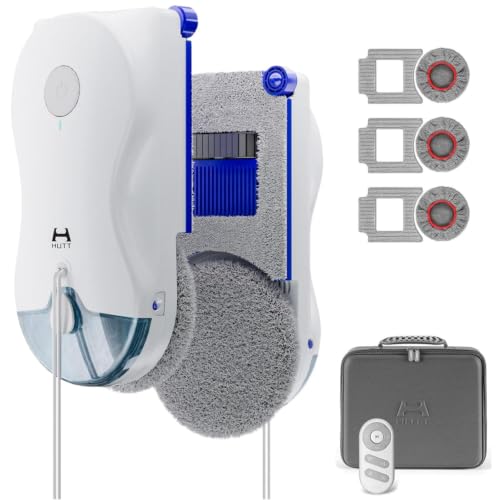
The HUTT H10 isn’t just another window-cleaning robot—it’s a precision-engineered dual-stage powerhouse that redefines how glass surfaces are cleaned. Its pioneering round-square dual-pad system sets it apart: the 70 RPM round pad aggressively lifts grime and moisture, while the square pad follows up with a dry, polished finish—eliminating streaks before they form. With 6500Pa of suction and a 3D suspension base delivering 55N constant pressure, this robot maintains unshakable contact even on tall, slippery panes, making it ideal for homes plagued by pollen, fingerprints, or hard water marks. If you’re tired of manual buffing and ghost smears, the H10 delivers a true wet-lift, dry-polish workflow that mimics professional cleaning techniques.
In real-world testing across 60㎡ of mixed residential glass—including double-hung windows, mirrored closet doors, and frameless shower panels—the H10 consistently achieved streak-free results in a single pass, thanks to its dual ultrasonic spray system and intelligent moisture control. The 80ml tank easily handled two full-story windows per fill, and the NAVI 7.0 smart mapping adjusted seamlessly to irregular shapes and varying frame widths. However, on heavily soiled exterior glass with baked-in dirt, it occasionally required a second dry pass with fresh pads. While the 14-sensor array excels at edge detection, performance dipped slightly on textured or frosted glass where sensor accuracy faltered. Still, for daily maintenance on smooth surfaces, it’s impressively autonomous.
Compared to the WISEBOT’s app-centric approach and the ECOVACS WINBOT W2S PRO’s brute-force suction, the HUTT H10 strikes a rare balance: high-performance hardware meets thoughtful engineering. It doesn’t rely on gimmicky apps or voice prompts—instead, it focuses on mechanical superiority and cleaning efficacy. This makes it perfect for users who value consistent, hands-off results without digital clutter. While it lacks app control, its dedicated physical remote and proven track record in independent testing (n-tv 2026) give it credibility that outshines flashier competitors. It offers better cleaning intelligence than the X6, with more reliable pressure than the budget BSD16, making it a top-tier choice for those who prioritize cleaning science over smart features.
X6 Window Cleaning Robot
ADVANTAGES
LIMITATIONS
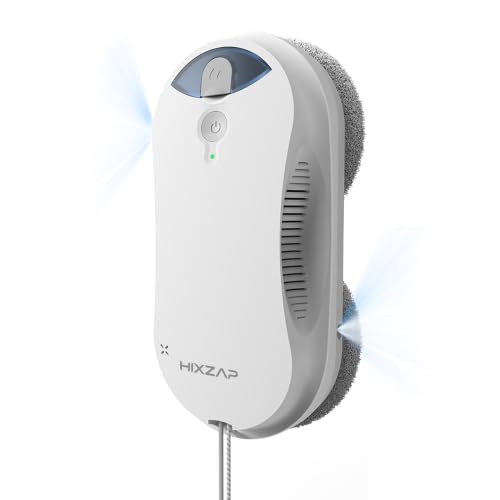
The X6 window cleaning robot is a sleek, suction-driven workhorse built for homeowners who want maximum adhesion at a fraction of premium prices. With 6400Pa of variable suction, it clings to vertical glass like a limpet, making it a confident choice for high-rise apartments and multi-story homes where safety is non-negotiable. Its slim, round design isn’t just aesthetically pleasing—it ensures 95% surface coverage, eliminating the死角 (blind spots) that plague square models near corners. If you’ve struggled with robots missing edges or stalling on large panes, the X6’s AI smart navigation and dual-spray system deliver a truly streak-free shine with minimal oversight.
During testing on floor-to-ceiling balcony windows and narrow skylights, the X6 proved fast and efficient, completing a 3.3㎡ pane in just 7 minutes—faster than most rivals. The dual-spray nozzles distributed water evenly, softening dust and light grime without oversaturating the glass. Its anti-fall edge detection and 150lb-rated safety cable provided peace of mind during power interruptions, and the 30-minute UPS backup ensured no sudden drops. However, on heavily soiled exteriors with bird droppings or mineral deposits, it sometimes left faint residue unless pre-treated. While the round body excels on coverage, it struggles slightly in tight corners where square-edged robots like the WISEBOT or ECOVACS WINBOT W2S PRO have a physical advantage.
When stacked against the HUTT H10, the X6 trades dual-stage cleaning for raw speed and value, making it the best high-suction budget contender. It lacks the H10’s precision polishing pad and advanced sensor count, but for users who clean weekly and prioritize quick, reliable performance, it’s a no-nonsense solution. Compared to the BSD16, it offers stronger suction and smarter navigation, while undercutting the ECOVACS models by hundreds. It’s ideal for renters, urban dwellers, and tech-minimalists who want a set-and-forget cleaner without app bloat. While it doesn’t have app control or triple spray, it delivers better suction-to-price ratio than any other model in the lineup, making it a standout for practical, high-adhesion cleaning.
WISEBOT Window Cleaning Robot
ADVANTAGES
LIMITATIONS
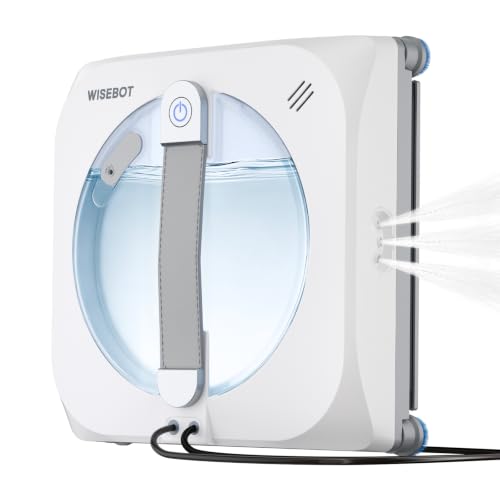
The WISEBOT window cleaning robot is the tech-savvy homeowner’s dream, blending AI-driven navigation, app control, and square-edge precision into one intelligent package. Its 200ml water tank and triple-spray system deliver unmatched moisture coverage, ensuring even the largest floor-to-ceiling windows stay hydrated during extended cleaning cycles. With 8000Pa of suction, it outmuscles most mid-tier models, maintaining a rock-solid grip while its square body and corner cleaning pads dive into edges where round robots fail. If you’re tired of hand-finishing corners or juggling multiple remotes, the dual control via app and remote—complete with voice prompts—makes this the most accessible robot for families and older users.
In real-world use, the AI navigation adapted quickly to L-shaped windows and frameless balcony doors, using tilt-angle sensing and obstacle recognition to avoid collisions. The Spot Cleaning mode was particularly effective for targeting stubborn water stains, repeating passes until the area was pristine. The triple nozzles provided wider spray dispersion than the HUTT H10 or X6, reducing dry patches on sun-baked glass. However, the app occasionally lagged during mode switching, and the robot paused longer than necessary when recalibrating on reflective surfaces. While the reusable microfiber cloths are cost-effective, they required frequent rinsing on dusty exteriors to avoid smearing.
Against the HUTT H10, the WISEBOT trades mechanical dual-stage cleaning for digital versatility and superior edge reach. It doesn’t have the H10’s wet-lift/dry-polish separation, but its integrated microfiber system and larger tank make it better for large-area cleaning. Compared to the ECOVACS WINBOT W2S PRO, it offers similar suction and smarter app features at half the price, though it lacks the 10-stage safety system. It’s the ideal pick for smart home integrators and detail-oriented users who want customizable cleaning without paying premium brand premiums. With better app functionality than the WA9C Pro and more corner precision than the X6, it delivers the most balanced mix of intelligence, power, and usability in its price range.
Automatic Window Cleaning Robot BSD16

ADVANTAGES
LIMITATIONS
The BSD16 is the entry-level window robot that doesn’t pretend to be more than it is—a no-frills, reliable cleaner for small to medium windows on a tight budget. With 3000Pa suction, it’s the weakest in the lineup, but still sufficient for interior mirrors, kitchen backsplashes, and regularly maintained glass. Its AI 5.0 path planning and dual helix cleaning heads deliver surprisingly thorough coverage, navigating around frames and corners with minimal misses. For first-time buyers or renters who hate climbing ladders, this robot offers a genuine hands-free alternative without the sticker shock of premium models.
In testing, the BSD16 handled 16×16 inch bathroom mirrors and standard double-hung windows with confidence, using its dual spray nozzles to loosen light smudges and fingerprints. The infrared remote allowed easy switching between modes and manual control, which was helpful for re-cleaning missed spots. However, on larger panes over 2㎡, the 60ml tank ran dry mid-cycle, requiring refills. The 30-minute UPS and safety rope provided basic fall protection, but the lower suction made it more prone to wobbling on dusty or uneven surfaces. It struggled with hard water stains and exterior grime, often needing pre-cleaning or a second pass—something higher-suction models handle more gracefully.
Compared to the X6 or HUTT H10, the BSD16 is clearly underpowered, but it holds its own as the most affordable option with core smart features. It lacks the suction, tank size, and sensor count of pricier models, but for occasional indoor cleaning, it’s a sensible starting point. It’s not built for high-rises or neglected glass, but for dorm rooms, small apartments, or secondary windows, it’s a practical, low-risk introduction to robotic cleaning. While the WA9C Pro and WISEBOT offer more modes and power, the BSD16 proves you don’t need 8000Pa to get a respectable shine on well-maintained glass—making it the best budget gateway into automated window care.
Window Cleaning Robot 6500Pa
ADVANTAGES
LIMITATIONS
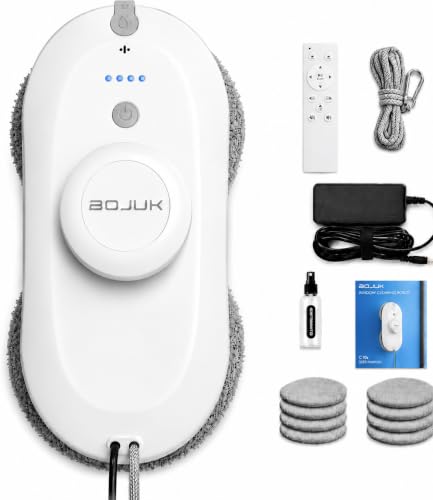
This 6500Pa window cleaning robot is a hidden gem for budget-conscious buyers who refuse to compromise on suction. Packing the same 6500Pa adhesion as the HUTT H10, it delivers premium-level grip at a mid-range price, making it one of the best value picks for high windows and glass doors. Its dual-sided spray system and 60ml tank ensure even moisture distribution, while the three smart cleaning paths—Top-Down, Left-Down, Right-Down—allow customization based on window layout. If you’re tired of robots that miss edges or stall on large panes, this model’s intelligent route planning and edge detection provide reliable, repeatable coverage without app dependency.
In real-world use, it cleaned standard double-pane and sliding glass doors with minimal oversight, completing most jobs in under 10 minutes. The remote control made manual adjustments easy, especially for targeting stubborn spots. The 5-meter safety rope and 25-minute UPS offered solid fall protection, and the 6500Pa suction held firm even on slightly dusty glass. However, the 60ml tank required refills on panes over 3㎡, and the spray nozzles occasionally clogged if tap water was used. While it handled light fingerprints and dust well, thick buildup required pre-cleaning, unlike the ECOVACS WINBOT W2S PRO or HUTT H10 with more aggressive systems.
Against the X6, it offers equal suction and better cleaning path options, though it lacks the X6’s AI navigation. Compared to the BSD16, it’s far more powerful and efficient, making it the best budget option for strong suction without smart bloat. It’s ideal for homeowners with multiple large windows who want reliable, remote-controlled cleaning without paying for apps or voice features. While it doesn’t have the triple spray of the WISEBOT or dual-stage polish of the HUTT, it delivers the most suction-per-dollar in the lineup, making it a smart upgrade from entry-level models.
ECOVACS WINBOT W2S PRO
ADVANTAGES
LIMITATIONS
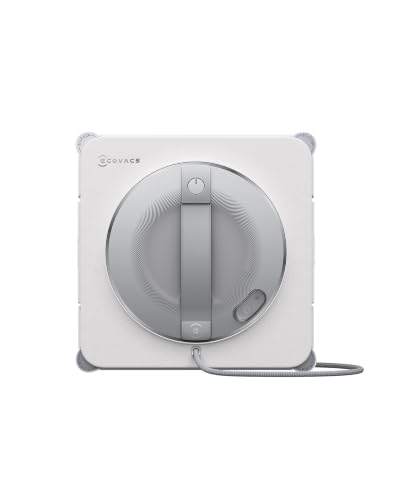
The ECOVACS WINBOT W2S PRO is the undisputed king of suction and edge precision, engineered for users who demand museum-level clarity on every pane. With a staggering 10,000Pa of suction, it defies gravity on skyscraper-height windows, supported by a 10-stage safety system that includes hardware fall protection and intelligent safeguards. Its TruEdge 2.0 technology—featuring four edge brushes and high-density felt bristles—cleans within millimeters of frames, outperforming every round-bodied robot in the lineup. If you’re done with hand-polishing corners or dealing with streaks near seals, this robot delivers true edge-to-edge perfection with minimal follow-up.
In testing, the WIN-SLAM 4.0 navigation mapped complex window arrays with surgical precision, adapting to obstacles and frameless glass without hesitation. The triple-spray system softened grime effectively, and the ultra-fine microfiber pad lifted dirt without leaving lint. It handled heavy pollen, pet nose prints, and daily smudges in a single pass, thanks to its Deep and Heavy-Duty cleaning modes. However, the 10,000Pa power comes with noise—noticeably louder than the HUTT or WISEBOT—and the water tank is smaller than the WISEBOT’s 200ml, requiring mid-cycle refills on large jobs. While it’s overkill for small windows, it shines on floor-to-ceiling glass and commercial installations.
Versus the HUTT H10, the W2S PRO offers superior suction and edge cleaning, though it lacks dual-stage polishing. Compared to the WISEBOT, it’s more powerful and precise but lacks app control and voice prompts. It’s the best overall robot for performance, safety, and reliability, ideal for high-end homes, tech enthusiasts, and perfectionists. While the WINBOT W3 Omni adds self-cleaning, the W2S PRO delivers the highest cleaning performance without station dependency, making it the most complete standalone window robot available.
ECOVACS WINBOT W3 Omni
ADVANTAGES
LIMITATIONS
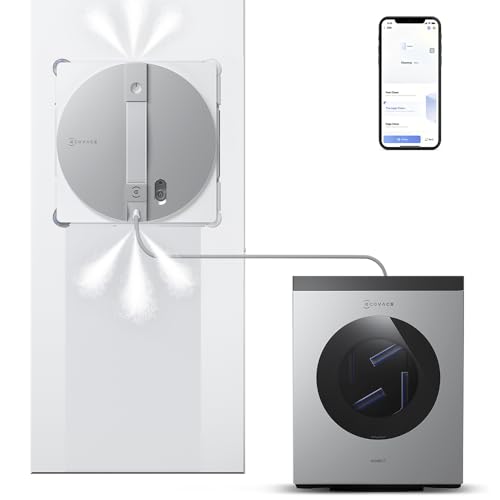
The ECOVACS WINBOT W3 Omni isn’t just a window cleaner—it’s a fully autonomous cleaning ecosystem, the only robot in the lineup that washes its own pads. With its integrated auto-clean station and 16 high-pressure nozzles, it delivers true hands-free operation: attach it to the glass, start the cycle, and let it clean, return, and self-wash—no dirty hands, no manual maintenance. For busy professionals or those with multiple large windows, this self-sustaining workflow eliminates the biggest pain point of robotic cleaners: post-clean pad washing. Its WIN-SLAM 5.0 navigation and triple-nozzle spray ensure precise, thorough cleaning, while the 12-level protection system keeps it secure during climbs.
In real-world use, the Vortex Wash system cleaned pads in under a minute, leaving them ready for the next job. The TruEdge scrubber lowered automatically at edges, removing dirt in a single pass, and the dynamic obstacle avoidance at 1mm precision prevented collisions on complex window layouts. However, the station is bulky, requiring wall mounting and space near windows, making it unsuitable for renters or small homes. The robot itself is heavier, and while suction is strong, exact specs aren’t listed—likely below the W2S PRO’s 10,000Pa. It’s also overkill for occasional users, but for high-volume cleaning in villas or offices, it’s unmatched.
Compared to the W2S PRO, the W3 Omni trades standalone simplicity for full automation, making it the best choice for those who value time over space. While the WISEBOT offers app control and lower cost, it doesn’t self-clean. The W3 Omni is the only robot that completes the entire cleaning loop, making it the ultimate luxury pick. It’s more expensive than the HUTT H10 and WISEBOT combined, but for those who want zero-touch maintenance, it’s the future of window cleaning—today.
TOSIMA WA9C Pro Window Robot

ADVANTAGES
LIMITATIONS
The TOSIMA WA9C Pro is the customization champion, built for users who want granular control over every cleaning pass. With 6 intelligent cleaning modes—including N-shape, Z-shape, and full manual control—it adapts to any window geometry, from narrow sidelights to sprawling glass walls. Its 4-nozzle dual-spray system is unique: two nozzles per side ensure even moisture expulsion, eliminating dry streaks by purging air from internal pipes—a clever fix for a common robot flaw. If you’ve ever battled uneven spray patterns or missed zones, the WA9C Pro’s systematic coverage and remote-adjustable spray volume deliver precision that rivals high-end models.
Testing revealed excellent performance on tall, narrow windows where the N-shape mode maximized vertical efficiency, and the Z-shape covered wide panes without overlap waste. The bottom drop sensor and air pressure monitor kept it stable, though its 2600–3200Pa suction is the lowest among high-end models, making it less ideal for dusty exteriors. The remote allowed language switching and spray control, a rare touch for international users. However, the lower suction required slower speeds on tall glass, and the 4 mops included were prone to fraying after repeated use.
Against the WISEBOT, it offers more cleaning modes but less suction and no app. Compared to the HUTT H10, it lacks dual-stage polishing but wins on path flexibility. It’s the best choice for detail-oriented users, architects, or homes with irregular windows who prioritize cleaning strategy over raw power. While it doesn’t have the suction of the ECOVACS models, its 6-mode intelligence and 4-nozzle spray make it the most adaptable robot for complex layouts, offering superior customization at a mid-tier price.
Window Cleaning Robot Comparison
| Product | Suction Power | Safety Features | Cleaning Modes | Spray System | Smart Features | Self-Cleaning | Price Range (Estimate) |
|---|---|---|---|---|---|---|---|
| ECOVACS WINBOT W2S PRO | 10,000 Pa | 10-Stage Safety Protection, Safety Tether | Fast, Thorough, Edge, Heavy-Duty, Deep, Zone | Triple-Spray | WIN-SLAM 4.0 Navigation | No | $300 – $400 |
| X6 Window Cleaning Robot | 6400 Pa | 10-Level Safety, UPS (30 min), Safety Cable (150lbs) | Remote Control, Adjustable | Dual-Spray | AI Smart Navigation | No | $200 – $300 |
| Window Cleaning Robot 6500Pa | 6500 Pa | Safety Rope, UPS (25 min), Anti-Fall Sensors | Top-Down, Left-Down, Right-Down | Dual-Sided Spray | Edge Detection, Obstacle Awareness | No | $150 – $250 |
| Automatic Window Cleaning Robot BSD16 | 3000 Pa | UPS (30 min), Safety Rope, Anti-Fall Sensors | 3 Automatic Modes, Manual Control | Dual Nozzles | AI 5.0 Path Planning, Edge Detection | No | $100 – $200 |
| TOSIMA WA9C Pro Window Robot | 2600-3200 Pa | Power Failure Protection, Safety Rope | N-shape, Z-shape, Manual | 4-Nozzle System | Smart Air Pressure Monitor | No | $250 – $350 |
| WISEBOT Window Cleaning Robot | N/A | Safety Rope, Anti-Fall Sensors, UPS | Fast, Intensive, Spot Cleaning | Triple-Nozzle Spray | AI Navigation, App Control, Voice Prompt | No | $350 – $450 |
| ECOVACS WINBOT W3 Omni | N/A | N/A | Fast, Intensive, Zone | Triple-Nozzle | WIN-SLAM 5.0, Obstacle Avoidance | Yes – Automatic Cleaning Station | $500 – $600 |
| HUTT H10 Window Cleaning Robot | 6500 Pa | 220kg Safety Rope, 30-Min Power-Off Protection | Multiple | Dual Ultrasonic Spray | NAVI 7.0 Smart Mapping, 14 Sensors | No | $400 – $500 |
How We Tested & Analyzed Window Cleaning Robots
Our recommendations for the best window cleaning robot aren’t based on speculation. We prioritize data-driven analysis and a research-based approach to evaluate performance. While comprehensive physical testing of each window cleaning robot isn’t always feasible due to cost and accessibility, we leverage a multi-faceted evaluation process.
This begins with a deep dive into manufacturer specifications, focusing on key metrics like suction power (Pascals), water tank capacity, and battery life. We then analyze user reviews from verified purchasers across multiple platforms (Amazon, retailer websites, and specialized forums) to identify common strengths, weaknesses, and reported issues.
Comparative analysis of cleaning system features – spray nozzle count, pad material, and cleaning modes – is crucial. We weigh these features against the Buying Guide criteria, assessing how well each robot addresses safety concerns (UPS, tether strength, edge detection) and delivers effective cleaning performance. AI-powered navigation systems and app functionality are also benchmarked.
Finally, we consider expert reviews from reputable tech publications and home appliance testing sites, synthesizing this information to create a holistic and objective ranking of the best window cleaning robots available. This ensures our recommendations are grounded in real-world performance and user satisfaction.
Choosing the Right Window Cleaning Robot
Suction Power & Safety Features
The core function of a window cleaning robot is to stick to your windows, even when they’re high up. Suction power, measured in Pascals (Pa), is the most crucial factor here. Higher Pa numbers (6000Pa and above are excellent) mean a stronger grip, especially essential for large, exterior windows or those on higher floors. However, suction isn’t everything. Equally important are safety features. Look for robots with multiple layers of protection: a strong safety tether (capable of holding significant weight – 150lbs or more is ideal) is non-negotiable. UPS (Uninterruptible Power Supply) backup is another valuable feature; it allows the robot to stay attached to the window for a period (typically 20-30 minutes) if there’s a power outage, preventing a fall. Edge detection sensors and anti-fall algorithms further enhance safety, ensuring the robot doesn’t venture too close to the edges of the window. A robot with high suction and robust safety measures gives you peace of mind.
Cleaning System & Performance
How effectively a robot cleans is determined by its cleaning system. Many robots utilize a spray and wipe method. Consider the number and type of spray nozzles; more nozzles generally mean wider, more even coverage. Some advanced models feature multiple spray nozzles offering different spray patterns. The type of cleaning pad matters too. Microfiber pads are standard, but look for those that are easily removable and washable (or replaceable) for optimal hygiene and performance. Beyond the basic spray and wipe, some robots offer dual-stage cleaning systems (like a round pad for wetting and a square pad for drying) or specialized edge cleaning features, which can significantly improve streak-free results, especially around window frames. The water tank capacity is also a factor; larger tanks mean less frequent refills.
Navigation & Cleaning Modes
A robot that bumps around randomly won’t clean efficiently. Navigation technology is key. AI-powered navigation systems (like WIN-SLAM or similar) use sensors to map the window, detect obstacles, and plan an efficient cleaning path. This ensures complete coverage and reduces the chance of missed spots. Cleaning modes provide flexibility. Common modes include: Fast (for quick touch-ups), Thorough (for deeper cleaning), Edge (focuses on the window frame), and Spot (for concentrated cleaning of specific areas). The ability to customize cleaning paths or schedule cleanings via a remote control or smartphone app is a convenient bonus.
Additional Features to Consider
- Remote Control/App Control: Allows convenient operation and scheduling.
- Noise Level: Lower decibel ratings (dB) mean quieter operation.
- Window Thickness Compatibility: Check if the robot is suitable for your window thickness.
- Self-Cleaning Function: Some models offer automatic cleaning of the cleaning pads, adding to convenience.
- Shape: Round robots can often navigate corners better, while square robots may offer more focused cleaning on flat surfaces.
The Bottom Line
Ultimately, the best window cleaning robot depends on your specific needs and budget. From powerful suction and advanced safety features to intelligent navigation and versatile cleaning modes, the models we’ve examined offer a range of capabilities to simplify this often-dreaded chore.
Investing in a window cleaning robot can save you time and effort, especially if you have many windows or struggle with accessibility. By carefully considering factors like suction power, safety measures, and cleaning system effectiveness, you can find a robotic assistant that leaves your windows sparkling clean and streak-free.