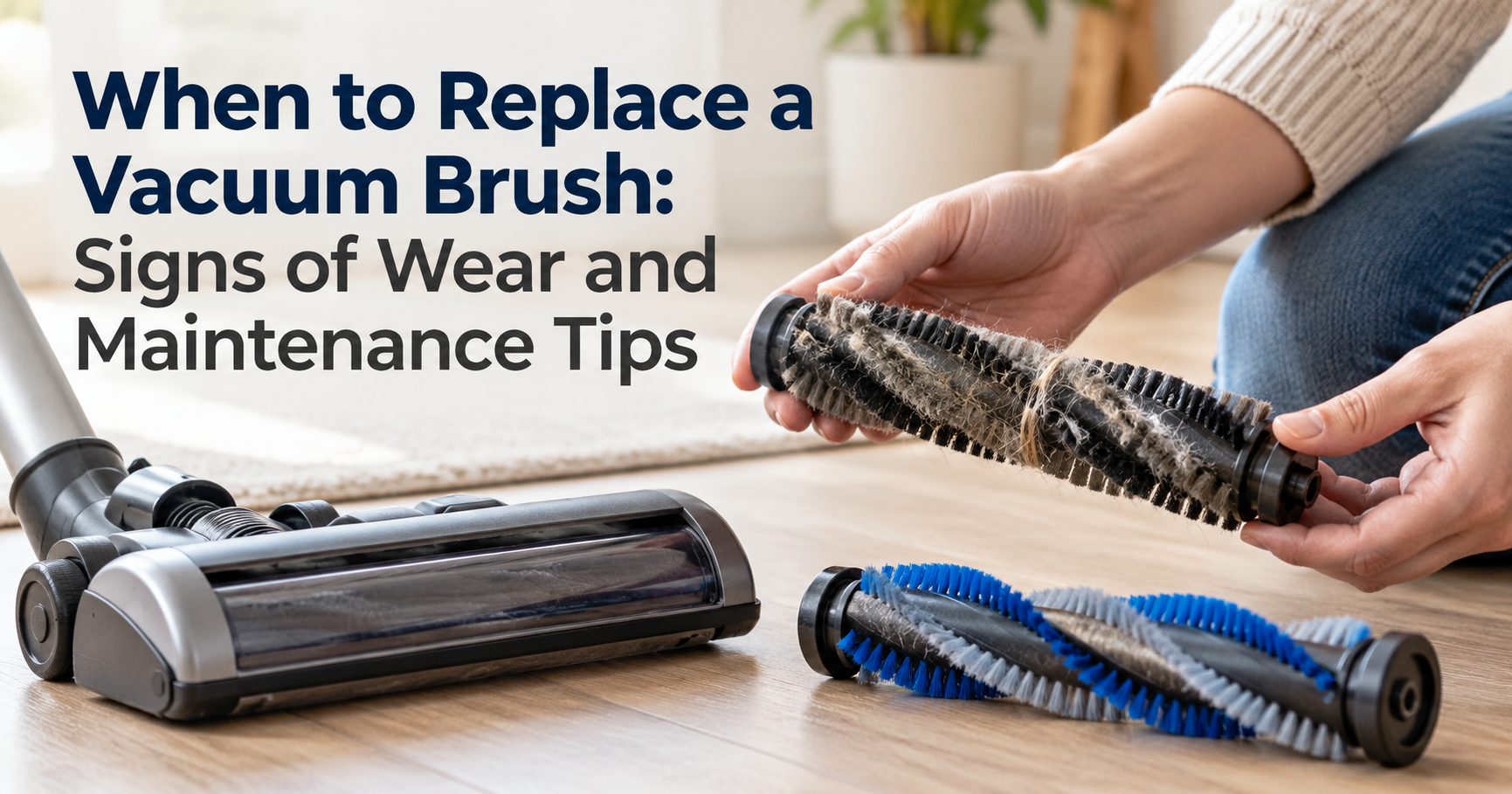

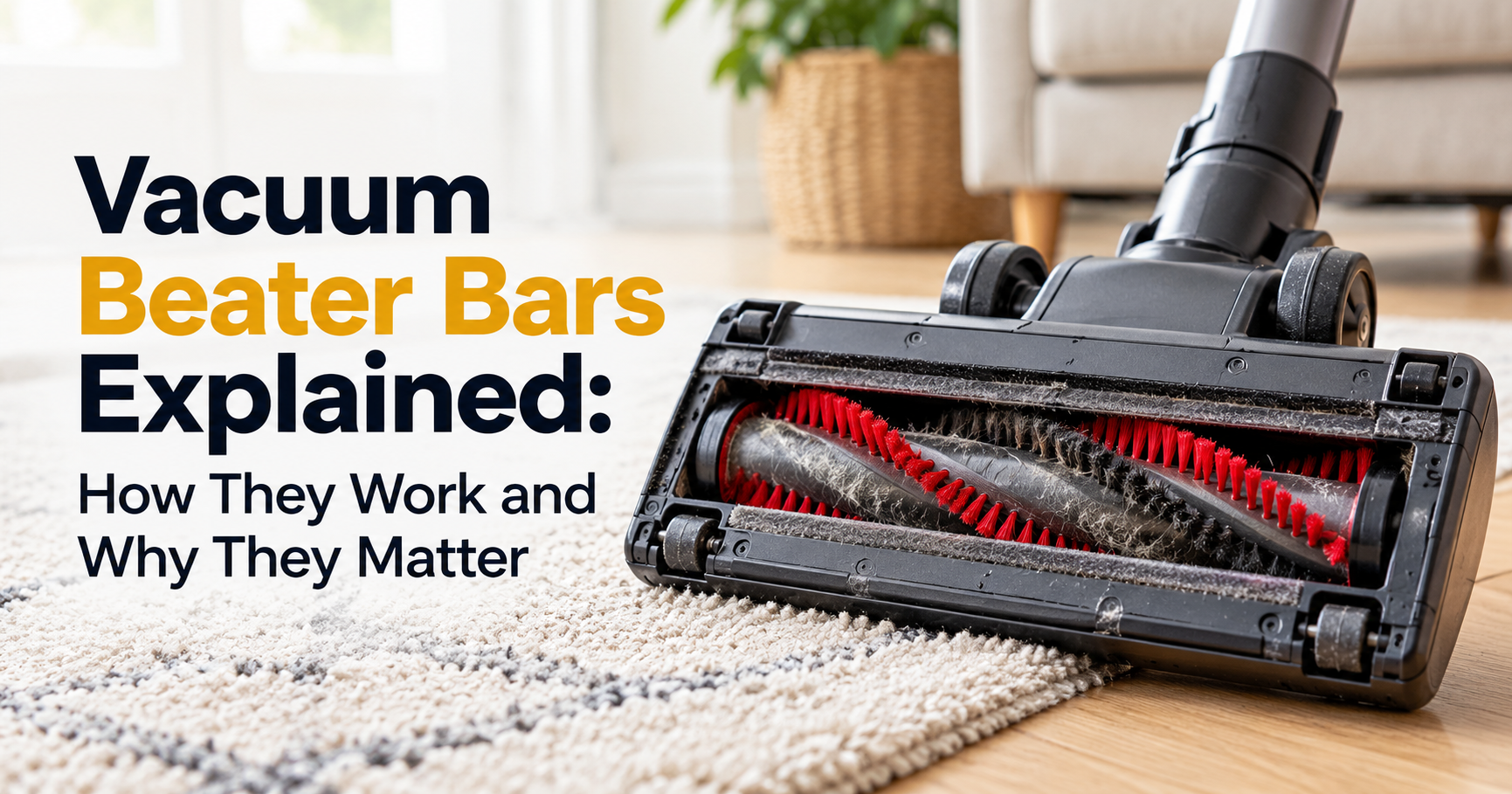

If you have ever flipped over your vacuum cleaner and noticed a spinning, bristly roller in the floor head, you have met the beater bar. It is one of the most important parts of an upright or canister vacuum with a powered head, yet many people are not sure what it does, whether they really need it or how to look after it.
In this complete guide, you will learn exactly what a beater bar is, how it works, how it differs from a brush roll and an agitator, which floors it suits, how to clean and maintain it, and what to look for when buying a vacuum.
Quick Answer
A beater bar is the rotating bar or brush in a vacuum cleaner’s floor head. As it spins, it agitates carpet fibers to loosen embedded dirt, dust, hair and pet fur so the suction can lift it away. Today the terms beater bar, brush roll, brush bar and agitator are often used for the same part.
What Is a Beater Bar on a Vacuum?
A beater bar is a motorized rotating cylinder mounted inside the cleaning head of a vacuum cleaner. It sits right behind the suction opening and spins against the floor surface. Its job is simple but powerful: to “beat” and brush the carpet so that dirt trapped deep in the pile is shaken loose.
Suction alone is good at picking up loose debris from the surface, but it struggles with grit that has worked its way down between carpet fibers. The beater bar solves this by combining three actions at once:
- Agitating the fibers so they stand up and release trapped soil
- Sweeping loosened debris toward the suction inlet
- Lifting hair, threads and pet fur so they can be drawn into the vacuum
How a Beater Bar Works
Most beater bars are driven by a small electric motor. In the most common design, a rubber belt connects the motor’s pulley to the roller, which makes the roller spin at high speed. As you push the vacuum forward, the spinning bristles or fins agitate the carpet while the fan draws air and debris through the nozzle into the dust bin or bag.

The main parts
- Roller or bar: the cylinder that carries the bristles, fins or rubber strips
- Drive belt: a rubber loop that transfers power from the motor to the roller
- Motor: powers the roller (and sometimes the main suction fan too)
- End caps and bearings: hold the roller in place and let it spin freely
- Suction inlet: the opening where air, dust and hair are pulled in
- Height adjustment and on/off control: let you adapt the roller to different floors
A Short Look at Where the Beater Bar Came From
Early upright vacuum cleaners in the 20th century popularized the idea that a spinning agitator could clean carpets far better than suction alone. Manufacturers promoted this action as a way to beat dirt out of the carpet, sweep it up and clean it with air. Modern vacuums have refined the idea with softer bristles, anti-tangle designs, better belts and the option to switch the roller off, but the core principle has barely changed.
Beater Bar vs. Brush Roll vs. Agitator
These words are used so loosely today that even product listings mix them up. Here is how they are usually understood:
| Term | What It Usually Means | Typical Look |
|---|---|---|
| Beater bar | The traditional term for the spinning bar that beats and brushes carpet; often has stiff fins or ridges along with bristles | Rigid bar with rubber or plastic ribs and bristle strips |
| Brush roll / brush bar | A cylinder covered mainly in bristles that sweep and loosen debris | Roller with rows or spirals of bristles |
| Agitator | A general term for any powered part that stirs up carpet fibers | Can be a bar, brush, paddle or soft roller |
| Soft roller | A fabric or microfiber-covered roller designed for hard floors | Smooth, plush cylinder with no stiff bristles |
In everyday use, most people (and most manufacturers) treat beater bar and brush roll as the same thing. If you are shopping, focus on the design of the roller rather than the exact name.
Common Types of Beater Bars and Brush Rolls
- Bristle brush roll: Rows of nylon bristles that reach into carpet pile. A good all-round choice for carpets and rugs.
- Rubber-fin or beater-style bar: Flexible fins or ridges that beat the carpet, often paired with bristles for deeper agitation.
- Combination roller: Mixes bristles with rubber strips or felt to handle both carpet and mixed flooring.
- Soft roller head: A plush roller that picks up fine dust and larger crumbs on hard floors without scratching.
- Anti-tangle roller: Uses spiral patterns, special blades or combs to push hair toward the center and out of the way, reducing wrapped hair.
- Dual roller: Two rollers, often one on top of the other, for extra agitation or to handle different debris sizes.
Benefits of Having a Beater Bar
- Deeper carpet cleaning. Agitation lifts dust, sand and crumbs that suction cannot reach on its own.
- Better pet hair pickup. Hair that clings to fibers is brushed loose and drawn in.
- Revives carpet appearance. The brushing action lifts flattened pile and leaves the familiar tidy “vacuum stripes”.
- Helps with allergens. Loosening trapped dust and dander makes it easier for a vacuum with good filtration to remove it from the room.
- Works faster. You often need fewer passes to get the same result.
Drawbacks and Things to Watch Out For
- Hair tangles. Long hair, string and thread wrap around the roller and need regular cutting away.
- Scattering on hard floors. A fast-spinning bristle roller can flick crumbs and pet litter across smooth surfaces.
- Possible surface damage. Stiff bristles may scuff delicate flooring, and the roller can snag rug fringes or loose threads.
- Extra wear parts. Belts and bristles wear out over time and need replacing.
- More noise. The spinning roller adds mechanical noise compared with suction-only tools.
When to Use the Beater Bar (and When to Switch It Off)
The right setting depends on the surface. A quick rule: carpets love beater bars, smooth floors do not.

If your vacuum does not have an on/off switch for the roller, look for a lower-power setting, a hard floor mode, a soft roller head or a suction-only attachment for bare floors and delicate rugs.
How Beater Bars Are Powered
| Drive Type | How It Works | Good To Know |
|---|---|---|
| Belt-driven | A rubber belt links the motor to the roller | The most common design. Belts stretch or snap over time and are cheap and simple to replace. |
| Direct drive | The motor connects straight to the roller with no belt | Fewer wear parts and often more consistent power, but can cost more to repair. |
| Air-driven (turbine) | Airflow spins a small turbine that turns the roller | Typical on lighter models and handheld tools. Gentler agitation, suited to light carpets and stairs. |
Signs Your Beater Bar Needs Attention
- The roller does not spin, or spins weakly or intermittently
- A burning rubber smell, or a squealing or grinding noise
- Visible hair, thread or string wrapped around the bar
- Bristles that look flattened, bent or worn almost level with the roller
- Carpet no longer looks cleaned, or you notice debris left behind
- The vacuum shuts off or an overload or blockage indicator appears
How to Clean and Maintain a Beater Bar
A few minutes of care every month keeps the roller spinning freely and protects the motor.

- Unplug the vacuum. Always switch off and unplug it (or remove the battery) before touching the roller.
- Remove the roller. Turn the vacuum over, release the cover plate or end cap and lift out the bar, following your manual.
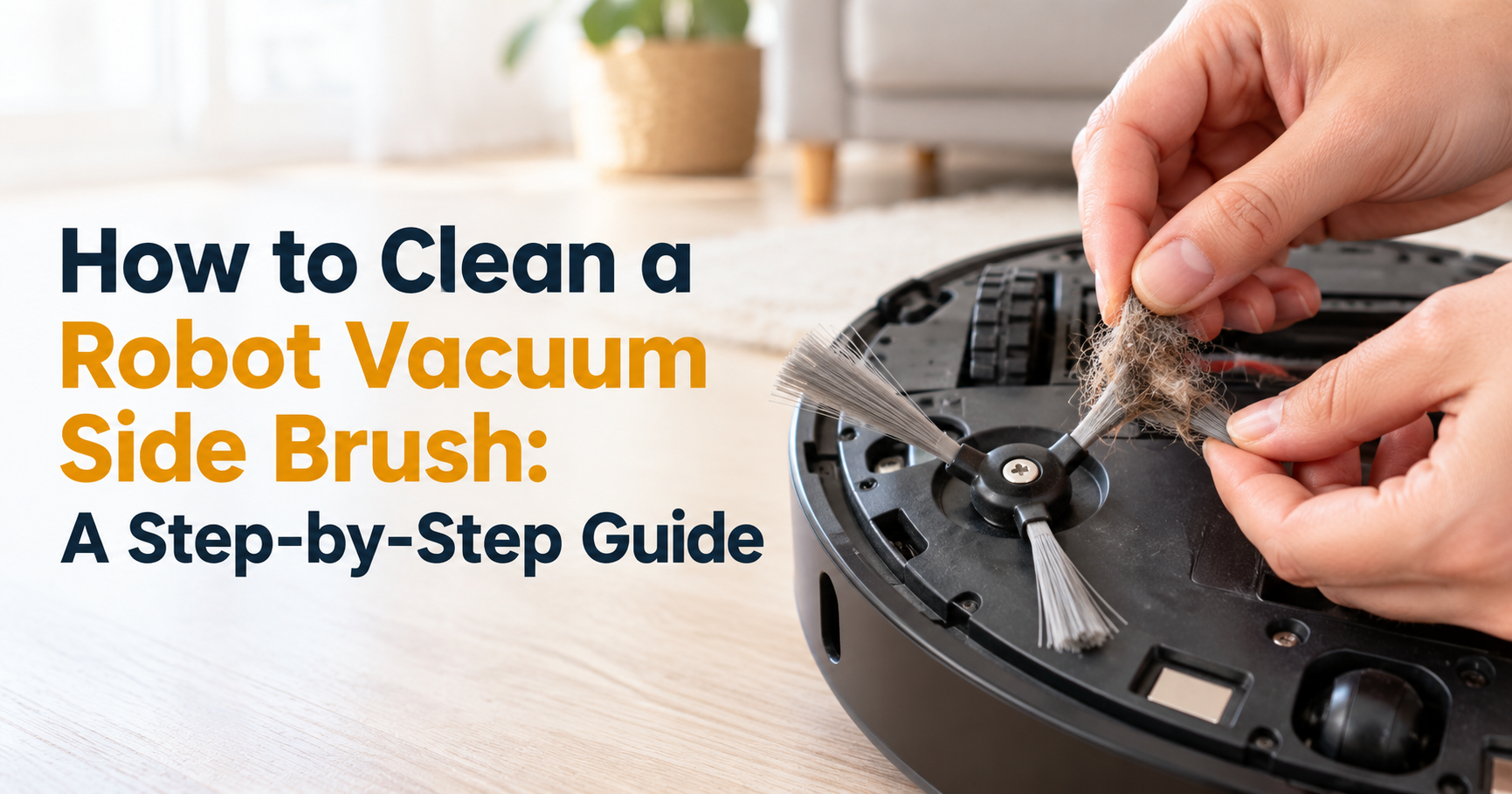
- Cut away tangled hair and thread. Slide scissors or a seam ripper along the groove, if the roller has one, and pull the hair off in sections.
- Wipe it down. Remove fluff and grit from the bristles, end caps and the roller chamber with a dry or slightly damp cloth.
- Check the belt. It should be snug, not cracked, glazed, shiny or visibly stretched.
- Check the bristles. If they are worn almost level with the roller body, they are no longer cleaning well.
- Refit and test. Replace the roller and cover, make sure it spins by hand and then run the vacuum on a safe surface.
Safety Note
Never reach into the brush chamber while the vacuum is plugged in or while the roller is moving. Only use manufacturer-approved replacement parts.
When to Replace the Belt or Brush Roll
- Belt: Replace it if it is broken, loose, cracked or smells burnt. Many manufacturers suggest checking it every few months and replacing it about once a year with regular use.
- Brush roll: Replace it when the bristles are badly worn or bent, the roller wobbles, the end caps are damaged or it will not spin freely.
- Whole floor head: If the motor in the head has failed or the casing is cracked, replacing the entire head may be more practical than fixing individual parts.
Buying Guide: What to Look For in a Vacuum with a Beater Bar
- On/off switch for the roller: Essential if you have both carpet and hard flooring.
- Adjustable height: Lets the bar sit properly on thin or thick carpet.
- Anti-tangle design: A real time-saver for long hair and pets.
- Easy roller access: Tool-free or quick-release covers make cleaning less of a chore.
- Soft roller option: Great if you have a lot of hardwood or tile.
- Good filtration: A sealed system with a quality filter keeps fine dust from escaping.
- Parts availability: Check that belts and rollers are easy to find and affordable.
- Weight and maneuverability: A heavy head can be tiring, especially on stairs and large rooms.
- Warranty: Longer cover on the motor and floor head is a plus.
Who Needs a Beater Bar Most?
- Households with carpets or large rugs, especially medium to thick pile
- Pet owners dealing with shedding fur embedded in fabrics
- Families with children where crumbs and dirt get ground into carpet
- Allergy-conscious homes that want to loosen deep dust, paired with good filtration
If your home is mostly hardwood, tile or laminate, a suction-focused vacuum or one with a soft roller or switchable beater bar is usually a better fit.
Common Mistakes to Avoid
- Leaving the beater bar on while cleaning hard floors, rug fringes or delicate rugs
- Ignoring tangled hair until the roller stops spinning
- Running the vacuum with a worn-out or broken belt
- Setting the height too low on thick carpet, which can strain the motor and bog down the roller
- Vacuuming up large objects such as string, cords or tassels that can wrap around the bar
- Using non-approved replacement parts that do not fit properly
Frequently Asked Questions
What does a beater bar do on a vacuum?
It spins against the floor to agitate carpet fibers, loosen embedded dirt, hair and pet fur and sweep them toward the suction inlet so they can be picked up.
Is a beater bar the same as a brush roll?
In everyday use, yes. Strictly speaking, a beater bar has stiff fins or ribs that beat the carpet, while a brush roll is covered mostly in bristles. Many modern rollers combine both, so the names are used interchangeably.
Do I need a beater bar for hardwood floors?
No. A standard bristle roller can scatter debris and may scuff delicate surfaces. Switch it off, use a soft roller head or choose a suction-only mode for hard floors.
Why is my vacuum’s beater bar not spinning?
The most common reasons are a broken or stretched belt, a roller jammed with hair or string, a clogged brush chamber or a tripped overload protection. Unplug the vacuum, check the belt and clean the roller. If the problem continues, the motor or switch may need servicing.
How often should I clean the beater bar?
Check it about once a month, and more often if you have long hair, pets or heavy carpet use.
Can a beater bar damage carpet?
Used correctly, it is safe for most carpets. However, delicate, looped (Berber-style), shaggy or fringed carpets and rugs can snag or fuzz. Check your carpet manufacturer’s advice and use a higher height setting or suction-only mode if in doubt.
Can I replace a beater bar myself?
Usually yes. Most vacuums let you remove the roller after releasing a cover or end cap. Always unplug the vacuum first and use the exact part for your model.
Final Thoughts
The beater bar is the unsung hero of carpet cleaning. By agitating fibers and lifting stubborn dirt, hair and pet fur, it helps a vacuum do far more than suction ever could alone. Understanding how it works, when to switch it off and how to keep it clean lets you get better results, protect your floors and extend the life of your machine. Whether you are replacing a worn roller or choosing a new vacuum, look for an adjustable, easy-to-clean beater bar that suits the floors in your home.
Disclaimer: This article is for general information only. Always follow the instructions in your vacuum’s user manual and flooring manufacturer’s guidelines, and unplug your vacuum before any cleaning or repair.
Affiliate disclosure: Some product mentions on this website may be affiliate products. If you choose to buy through them, we may earn a small commission at no extra cost to you. We only recommend items we believe offer real value.