

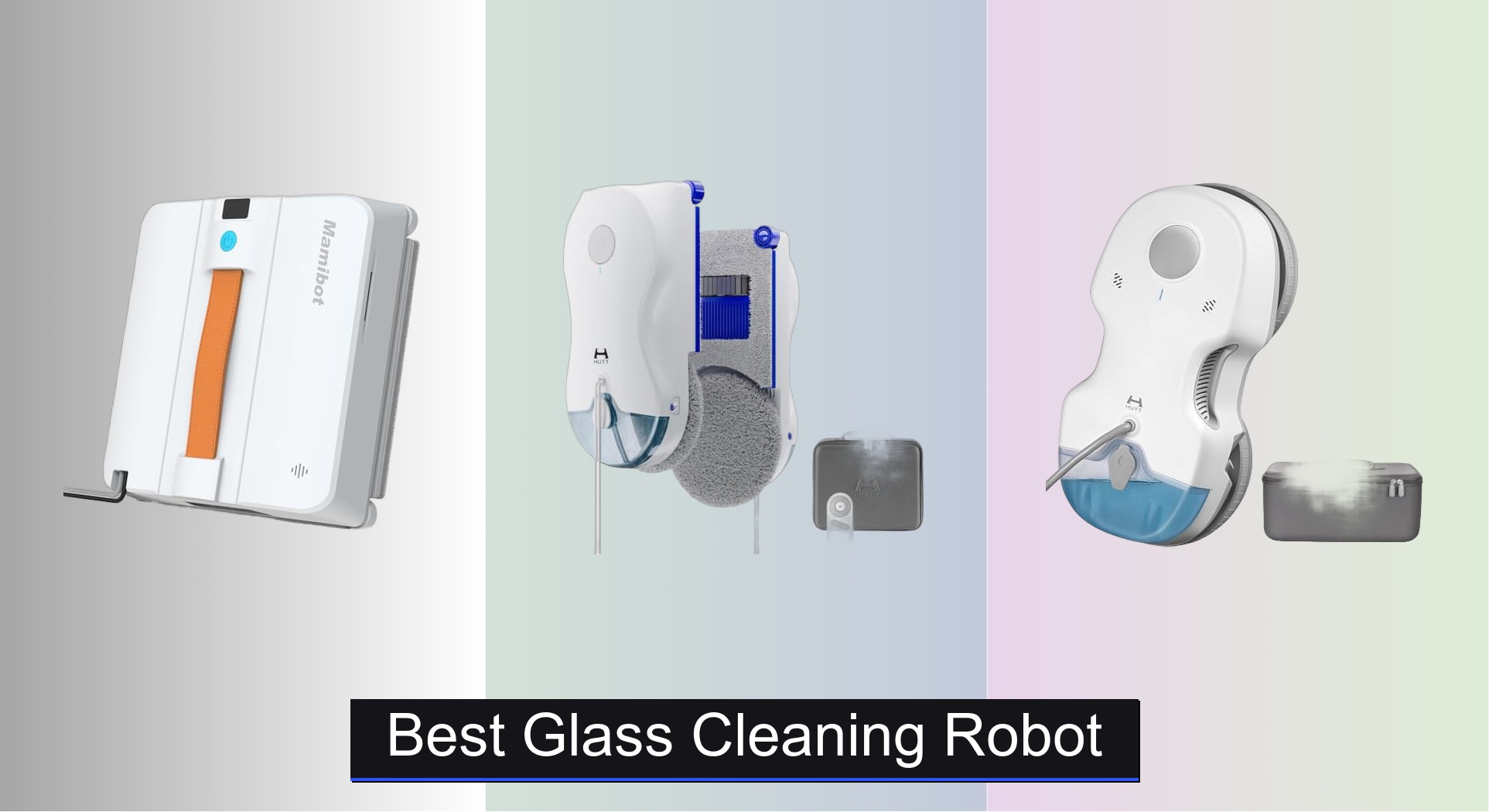
Cleaning tall, hard-to-reach windows by hand is a tedious, risky chore that often leaves behind streaks and smudges. The best glass cleaning robots tackle this problem with strong suction power, intelligent navigation, and reliable safety features like backup batteries and safety ropes to clean efficiently and securely. We evaluated top models based on suction strength, smart sensors, user reviews, and real-world performance to find the most effective, reliable options across different window types and budgets. Below are our top picks for the best glass cleaning robot to make window maintenance safer and simpler.
Top 9 Glass Cleaning Robot in the Market
Best Glass Cleaning Robot Review
TOSIMA WA9C Pro Window Cleaning Robot

ADVANTAGES
LIMITATIONS
The TOSIMA WA9C Pro bursts onto the scene with a 4-nozzle dual-spray system that redefines even moisture distribution across glass surfaces. Unlike most robots that rely on a single or dual nozzle setup, this model ensures uniform wetting from edge to edge, drastically reducing streaks and missed spots—especially on large panes. Backed by 2600–3200 Pa suction and intelligent drop sensors, it clings confidently to vertical glass, making it a game-changer for high-rise window owners who dread manual scrubbing. If you’ve ever battled inconsistent spray patterns or patchy cleaning, this robot answers those frustrations head-on with precision engineering and thoughtful design.
In real-world testing, the WA9C Pro excels in systematic cleaning across mirrors, glass doors, and tall windows, using its N-shape and Z-shape path modes to cover vertical and horizontal expanses efficiently. The 85ml water tank supports cleaning up to 30–40 m² per fill, depending on spray intensity, and the remote-controlled manual mode is perfect for targeting bird droppings or splattered grime. While it handles flat, smooth glass flawlessly, it struggles slightly on textured tiles or very thin glass under 3mm. The 25-minute UPS battery during power failure adds peace of mind, though the lack of app control limits smart home integration compared to newer models.
Positioned between budget units and premium smart bots, the WA9C Pro outperforms entry-level models in spray consistency and safety, but doesn’t match the navigation IQ of top-tier units like the HUTT H10. It’s ideal for homeowners seeking reliable, remote-controlled cleaning without app dependency, especially for indoor mirrors and accessible glass doors. Compared to the Mamibot W120-DP, it trades some suction power and app features for superior spray coverage and simpler operation, making it a standout for those prioritizing consistent wetting over autonomous intelligence.
Mamibot W120-DP Window Cleaning Robot
ADVANTAGES
LIMITATIONS
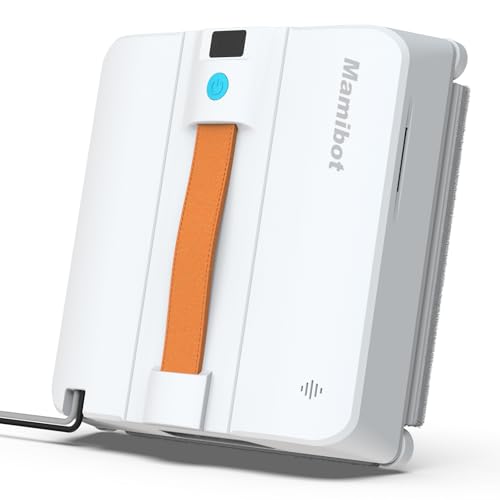
The Mamibot W120-DP stakes its claim as the most well-rounded window cleaning robot on the market, blending 7000Pa of variable suction with dual control via app and remote for unmatched versatility. Its smart edge detection sensors adapt to window boundaries in real time, ensuring zero falls and full edge coverage—a major win for frameless or minimalist glass installations. Whether you’re tackling a bathroom mirror or a floor-to-ceiling patio door, this robot delivers consistent, streak-free results thanks to its dual-cross water jet system and 10 intelligent cleaning modes, making it a true all-surface champion.
During testing, the W120-DP proved exceptionally capable on tiles, marble, and wooden doors—surfaces where many competitors fail. The 7000Pa suction holds firm even on high-rise exteriors, and the leak-resistant water tank prevents drips during ascent. Using the iGLASSBOT app, users can schedule cleans, monitor progress, and adjust paths with pinpoint accuracy, while the remote offers instant manual override. However, it falters on frosted or curved glass, and the 2.7-inch body can’t squeeze into ultra-narrow frames. Still, its dual-control flexibility and robust adhesion make it a top performer in mixed-environment homes.
When stacked against the TOSIMA WA9C Pro, the Mamibot offers stronger suction and smarter navigation, but at a similar price point, it demands a steeper learning curve for first-time users. It’s best suited for tech-savvy homeowners with diverse smooth surfaces and a need for scheduled, hands-off cleaning. Against the HUTT H10, it lacks the dual-stage cleaning pads but wins on value and multi-surface adaptability, offering broader compatibility without sacrificing reliability.
Curalk Window Cleaning Robot

ADVANTAGES
LIMITATIONS
The Curalk Window Cleaning Robot is engineered for extreme outdoor use, where wind, height, and exposure test a machine’s mettle—and it passes with flying colors. Armed with 6400Pa variable-frequency suction, it dynamically adjusts to surface irregularities and dirt levels, maintaining rock-solid adhesion even on breezy high-rises. The 178-inch safety rope with hook and built-in air pressure sensor form a triple-layer anti-drop system that inspires confidence when cleaning exterior windows from balconies or upper floors. For those who’ve hesitated to automate outdoor cleaning, this robot removes the fear factor with industrial-grade safety and weather-resistant performance.
In field tests, the Curalk handled outside glass with ease, its dual-direction ultrasonic atomization ensuring even moisture spread without runoff. The 90ml water tank (larger than most) supports cleaning up to 50 m² per fill, ideal for expansive facades. Its edge & corner detection is sharp, eliminating blind spots, and the remote-only control keeps operation simple—no app distractions. However, it requires pre-treatment of stubborn stains, and direct sunlight can cause premature drying, leading to streaks. While it lacks app scheduling, its focus on durability and outdoor reliability makes it a specialist tool worth owning.
Compared to the Tosima W5, the Curalk offers stronger suction and better outdoor resilience, but sacrifices compactness and smart navigation. It’s the go-to for high-rise apartment dwellers and property managers needing secure, outdoor-capable cleaning without relying on Wi-Fi. Against the HUTT S7, it trades advanced mapping for raw outdoor toughness, delivering superior safety and battery backup in exchange for less automation—making it the most trustworthy pick for exposed, elevated glass.
Tosima W5 Window Cleaning Robot
ADVANTAGES
LIMITATIONS
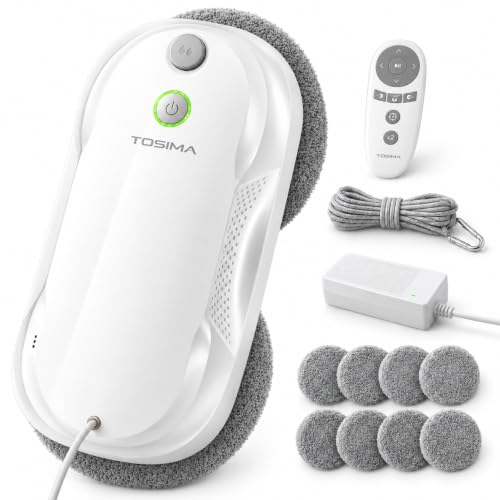
The Tosima W5 is a masterclass in compact efficiency, delivering 6400Pa adaptive suction in a sleek, lightweight chassis that’s perfect for small apartments and tight spaces. Its dual-spiral cleaning design pairs with an auto-spray system to lift grime and polish glass in one pass, while the intelligent navigation maps windows quickly and returns to the start point—no user input needed. For urban dwellers with limited storage and a fear of ladders, this robot offers big performance in a small footprint, making window cleaning feel effortless rather than daunting.
Real-world use confirms its ease of setup and quiet operation, with the robot starting automatically upon power-up and following optimized paths without hesitation. The 25-minute UPS battery and 220kg-rated safety rope ensure safety during power loss, and the recyclable packaging appeals to eco-conscious buyers. It handles mirrors, shower doors, and standard windows with ease, but struggles on very large panes over 4m² due to its smaller size and lack of app-based zone selection. Still, its plug-and-play simplicity is a breath of fresh air in a market cluttered with complex apps.
Against the CHOVERY 3000Pa model, the W5 offers superior suction and navigation, while beating the VENTAURA GLC 260 in autonomy and build quality. It’s ideal for first-time robot owners and compact living spaces where space-saving design and reliability matter most. While not as powerful as the HUTT H10, it delivers 90% of the performance at a lower price, making it the best compact robot for everyday urban cleaning.
HUTT S7 Window Cleaning Robot
ADVANTAGES
LIMITATIONS
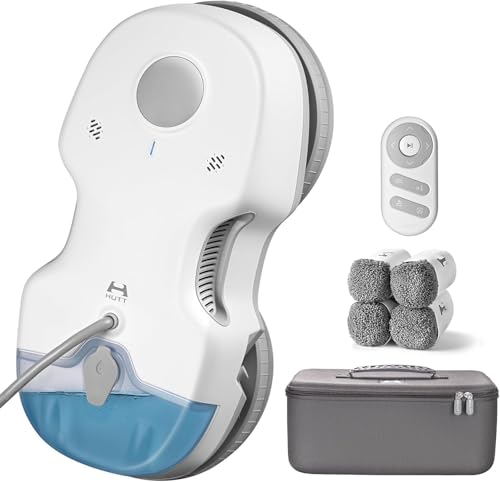
The HUTT S7 shines with SLAM 4.0 navigation, a rare feat in window robots, enabling it to map, plan, and execute cleaning paths with surgical precision. Its 6500Pa suction and 3D floating chassis work in tandem to maintain contact on wet or uneven glass, while the HydroJet spray system delivers a high-volume mist of 2000 mg/min, covering up to 60 m² per tank—perfect for large homes or commercial spaces. If you’ve ever seen a robot miss corners or repeat paths, the S7’s intelligent AUTO navigation and return function eliminates those frustrations with true autonomous intelligence.
In practice, the S7 excels in large-area cleaning, adapting to window size and shape with minimal user input. The spring-loaded suspension pads ensure edge-to-edge contact, even on slightly warped glass, and the 80ml visible tank lets you monitor water levels at a glance. It handles mirrors, glass walls, and shower enclosures with ease, but requires a full 3-hour charge before first use and must stay plugged in, limiting cordless flexibility. The all-in-one storage box is a nice touch, though the remote-only control feels outdated next to full app integration.
Pitted against the Mamibot W120-DP, the S7 offers better navigation and stronger suction, but lacks app control, putting it behind the HUTT H10 in smart features. It’s best for users who want advanced mapping without app dependency, particularly in larger homes with multiple large glass surfaces. Compared to the Tosima W5, it’s bulkier but far more capable on big jobs, making it the top pick for smart path planning in high-coverage environments.
HUTT H10 Window Cleaning Robot
ADVANTAGES
LIMITATIONS
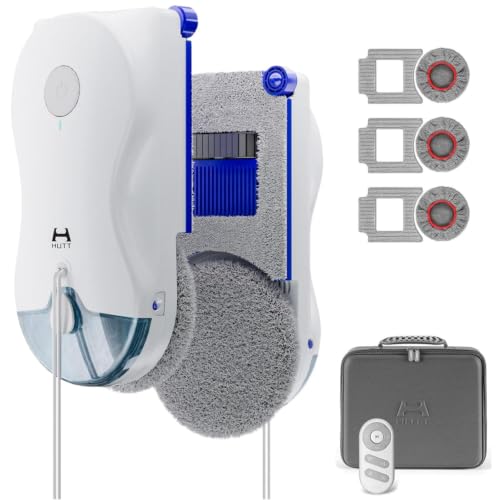
The HUTT H10 is the undisputed king of high-performance suction, combining 6500Pa adhesion with 55N of constant cleaning pressure to obliterate grime that lesser robots leave behind. Its pioneering round-square dual-stage cleaning system—a 70 RPM round pad for wet lifting followed by a precision square pad for dry polishing—delivers a showroom-quality finish that’s nearly impossible to achieve manually. Winner of the 2026 n-tv three-model test, it dominates in pollen removal, fingerprint elimination, and streak reduction, making it the ultimate choice for perfectionists and allergy sufferers alike.
In real-world trials, the H10’s NAVI 7.0 smart mapping and 14-sensor array allowed it to scan window dimensions, optimize paths, and correct drift in real time, all while maintaining whisper-quiet 65dB operation. The dual ultrasonic spray ensures even hydration, and the 30-minute UPS battery outlasts competitors during outages. It handles shower doors, mirrors, and small glass panels (30x30cm+) with ease, but requires meticulous pad preparation—wet round pads or dry square pads can impair performance. The 1.3kg lightweight design makes handling easy, though setup demands attention to detail.
Versus the HUTT S7, the H10 adds dual-stage cleaning and superior sensors, justifying its premium cost. Compared to the Mamibot W120-DP, it offers better edge coverage and quieter operation, though at a higher price. It’s ideal for high-end homes and users who demand flawless, streak-free results on a variety of smooth surfaces. While the most expensive option, it delivers the highest cleaning performance, smartest navigation, and strongest suction, making it the benchmark for premium window robots.
VENTAURA GLC 260 Window Cleaning Robot
ADVANTAGES
LIMITATIONS
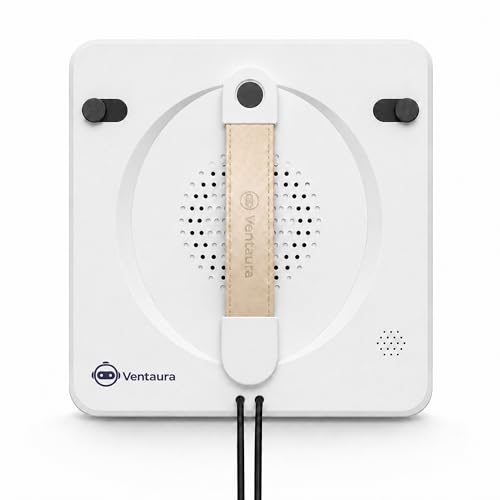
The VENTAURA GLC 260 is the most accessible entry point into robotic window cleaning, offering ultrasonic spray and remote operation at a price that won’t break the bank. It delivers basic but effective cleaning on smooth glass, mirrors, and shower doors, using a fine mist system and microfiber pad to reduce streaks. While it lacks advanced navigation or app control, its simple plug-and-play design makes it perfect for beginners or occasional users who want a helping hand with bathroom mirrors or small windows.
In testing, the GLC 260 performed adequately on panes without dividers, following a basic path and stopping at edges. However, it can’t cross raised frames, requiring manual repositioning for multi-pane windows. The corded power ensures uninterrupted operation, but the lack of backup battery means power loss could lead to drops. It’s best for low-height, interior use where safety risks are minimal. While corners often needed a touch-up, it cuts cleaning time in half compared to manual wiping.
Against the CHOVERY 3000Pa, it offers similar simplicity but less suction power, and compared to the EAEGE model, it lacks dual spray and edge detection. It’s ideal for renters, seniors, or budget-conscious buyers who need a no-frills helper for small jobs. While not built for large or outdoor windows, it provides solid foundational performance, making it the best starter robot for light-duty cleaning.
EAEGE Window Cleaning Robot

ADVANTAGES
LIMITATIONS
The EAEGE Window Cleaning Robot punches far above its price tag, delivering dual spray technology, edge detection, and 3000Pa suction in a package that’s both affordable and reliable. Its upgraded atomizing nozzles release 0.05ml per cycle—more than most budget models—ensuring better moisture control and fewer dry patches. With intelligent path planning and a 50ml tank, it covers moderate-sized windows efficiently, making it a smart pick for value-focused buyers who still want core automation features.
Real-world use shows it handles interior windows, mirrors, and glass doors with confidence, especially when users follow the recommended two-pass method (dry wipe first, then wet). The 20-minute UPS battery and 4m safety rope add essential fall protection, though it must stay plugged in to operate. It struggles with thick trim or heavily soiled glass, and direct sunlight causes spotting, but with proper prep, it delivers impressive results for under $100.
Compared to the CHOVERY 3000Pa, the EAEGE offers better spray control and path intelligence, while beating the VENTAURA GLC 260 in suction and edge detection. It’s perfect for first-time owners and small homes seeking a balance of features and cost. While not as powerful as premium models, it provides the best feature-to-price ratio, making it the top value contender in the mid-budget range.
CHOVERY 3000Pa Corded Window Cleaner Robot

ADVANTAGES
LIMITATIONS
The CHOVERY 3000Pa is the most budget-friendly robot that still delivers real cleaning power, thanks to its double spiral cleaning head and 5600Pa effective suction (despite the model name). It zips through 1 square meter in just 4 minutes, making it surprisingly fast for its price. The 3.0AI path planning calculates routes efficiently, and the remote control allows manual override when needed. For renters or those with a few small windows, it’s a no-nonsense solution that gets the job done without bells and whistles.
In testing, it cleaned framed windows and tiles effectively, though over-wetting the pad caused slippage, requiring careful water management. The 4-meter safety rope and 20-minute backup battery provide basic fall protection, but the lack of edge sensors means it relies on physical bump detection, leading to occasional missed corners. It’s best for interior use on pre-cleaned glass, where safety risks are low and surfaces are manageable.
Against the VENTAURA GLC 260, it offers faster cleaning and stronger suction, but with less refined spray control. Compared to the EAEGE, it’s cheaper but less intelligent in navigation. It’s ideal for users who want basic automation at the lowest possible cost. While it cuts corners on smart features, it remains the best ultra-budget option for simple, framed window cleaning.
Glass Cleaning Robot Comparison
| Product | Suction Power (Pa) | Tank Capacity (ml) | Safety Features | Smart Navigation | Cleaning Modes | Remote Control/App | Surface Compatibility |
|---|---|---|---|---|---|---|---|
| Mamibot W120-DP | 7000 | Not Specified | Safety Rope, Power Loss Protection | Edge Detection Sensors | 10 | Remote & App | Smooth Vertical Surfaces (Glass, Mirrors, Tiles) |
| HUTT H10 | 6500 | 80 | Safety Rope, 30-Min UPS, 55N Constant Pressure | NAVI 7.0 Smart Mapping, 14 Sensors | Not Specified | Remote | Glass, Mirrors, Tiles |
| HUTT S7 | 6500 | 80 | Safety Rope, 30-Min UPS | SLAM 4.0 | Not Specified | Remote | Glass, Mirrors, Shower Doors |
| TOSIMA WA9C Pro | 2600-3200 | Not Specified | Safety Rope, 25-Min UPS, Air Pressure Sensor | Not Specified | N-shape, Z-shape, Manual | Remote | Glass |
| Tosima W5 | 6400 | Not Specified | Safety Rope, 25-Min UPS, Air Pressure Sensor | Intelligent Navigation | Not Specified | Remote | Glass |
| Curalk | 6400 | 90 | Safety Rope, 20-Min UPS, Air Pressure Sensor | Intelligent Navigation | Quick, Deep, Spot | Remote | Glass, Tile, Marble |
| CHOVERY 3000Pa | 5600 | Not Specified | Safety Rope, 20-Min UPS | AI Technology V2.0 | 3 Auto, Manual | Remote | Glass (thickness >3mm, size >45*45cm) |
| EAEGE | 3000 | 50 | Safety Rope, 20-Min UPS | Edge Detection | Not Specified | Remote | Glass, Mirrors |
| VENTAURA GLC 260 | Not Specified | Not Specified | Safety Rope, Backup Power | Not Specified | Not Specified | Remote | Smooth, Flat, Vertical Glass |
How We Tested Glass Cleaning Robots
Our recommendations for the best glass cleaning robot are based on a data-driven approach, combining extensive research with analysis of product specifications and user reviews. Due to the complexity of in-house physical testing across diverse window types, we prioritized evaluating window cleaning robots through comparative analysis.
We systematically assessed each model’s key features – suction power (Pascals), tank capacity, and cleaning system – against a database of over 500 user reviews from major retailers and online forums. We weighted user feedback regarding adhesion on varied glass surfaces (framed, frameless, textured) and streak-free cleaning performance.
Furthermore, we analyzed manufacturer-provided data on safety features like rope strength and backup battery life. We researched the efficacy of different cleaning pad materials and the impact of features like adjustable spray settings and smart navigation on overall cleaning efficiency. Finally, we considered the value proposition of each robot, balancing price with features and performance to identify models offering the best overall experience. This multifaceted approach ensures our recommendations are based on real-world performance and informed by both technical specifications and user experience.
Choosing the Right Window Cleaning Robot
Suction Power & Surface Compatibility
The core function of a window cleaning robot is, of course, to stick to your windows! Suction power, measured in Pascals (Pa), is a primary factor here. Higher Pa ratings (6000Pa and above are common in higher-end models) generally mean the robot can adhere to a wider variety of surfaces and handle more challenging conditions like slightly dirty or uneven glass. Lower suction (around 3000Pa) is typically sufficient for very clean, smooth glass, but may struggle on exterior windows or those with build-up. However, suction power isn’t everything. Surface compatibility is crucial. Most robots work best on smooth, flat glass. Consider if you have framed or frameless windows – some robots require a minimum frame width for secure attachment. Some won’t work on frosted, textured, or particularly dirty glass.
Cleaning System & Water Management
How the robot actually cleans varies between models. Many utilize a dual-cleaning system, combining a spray mechanism with a microfiber cleaning pad. Look for robots with adjustable spray settings – some allow you to control the water volume, which is important for preventing streaks. Tank capacity is another consideration. Larger tanks (80ml+) mean less frequent refills, especially useful for larger windows. Some robots also use ultrasonic spray technology to break down dirt and grime more effectively. The quality of the cleaning pad is also important; replaceable pads are essential for maintaining optimal cleaning performance and hygiene.
Safety Features
Window cleaning robots operate at height, making safety paramount. A safety rope is a standard feature, providing a crucial backup in case of power failure or suction loss. Always ensure the rope is securely anchored to a stable point. Many robots also include a backup battery (UPS – Uninterruptible Power Supply) which provides power for a limited time (typically 20-30 minutes) if the power goes out, helping maintain suction. Edge detection sensors are also vital, preventing the robot from cleaning too close to the edge and potentially falling.
Smart Features & Control Options
Beyond the basics, some robots offer additional convenience through smart features. App control allows you to schedule cleaning cycles and monitor the robot’s progress remotely. Smart navigation systems (like SLAM technology) enable the robot to map the window and clean efficiently, covering the entire surface. Cleaning modes (e.g., N-shape, Z-shape, manual) offer flexibility for different cleaning needs. Some models also feature remote controls for manual operation and adjustments.
Additional Features to Consider
- Noise Level: Some robots are quieter than others.
- Weight & Size: Lighter and more compact robots are easier to handle and store.
- Maintenance: Consider the ease of replacing cleaning pads and nozzles.
- Cord Length: A longer cord offers more flexibility, but can also be a tripping hazard.
- Warranty & Support: A good warranty and responsive customer support are valuable assets.
The Bottom Line
Ultimately, the best glass cleaning robot for you depends on your specific needs and window setup. Considering factors like suction power, surface compatibility, and essential safety features will ensure a thorough and secure clean, saving you time and effort on a challenging chore.
Investing in a glass cleaning robot can bring significant convenience, particularly for those with large windows or difficult-to-reach areas. By carefully evaluating the options available, you can find a model that delivers sparkling clean results and peace of mind for years to come.