

Walk into any store or scroll through any online marketplace and you’ll find dozens of vacuum cleaners promising to be the best one for your home. Uprights, canisters, sticks, robots, wet/dry models — each type is genuinely better suited to certain homes and worse suited to others. The “best” vacuum isn’t a single product; it’s the one that matches your flooring, your living situation, and how you actually clean.
This guide breaks down exactly how to think through that decision, step by step.
Table of Contents
- Start With Your Flooring
- Do You Have Pets?
- Upright vs. Canister vs. Stick vs. Robot
- Corded vs. Cordless: The Real Trade-offs
- Bagged vs. Bagless
- Suction Power: What the Numbers Actually Mean
- HEPA Filtration and Allergies
- Weight and Maneuverability
- Attachments and Accessories Worth Having
- Noise Level
- Storage Space and Home Size
- Budget Tiers: What You Get at Each Price Point
- Brand Reliability and Warranty
- Common Buying Mistakes to Avoid
- Final Checklist Before You Buy
1. Start With Your Flooring
Flooring type is the single biggest factor in choosing a vacuum, and it’s the one most people skip past.
- Mostly carpet: You need strong brush roll agitation to dig dirt out of fibers. Uprights generally excel here.
- Mostly hard floors (tile, hardwood, laminate): A brush roll that spins too aggressively can scatter debris instead of collecting it. Canister vacuums or stick vacuums with a hard-floor setting (brush roll lifted or turned off) work better.
- Mixed flooring: The most common real-world case. Look specifically for a model advertised with automatic floor-type sensing or an easy manual switch between carpet and hard-floor modes.
- Area rugs on hard floors: Pay attention to whether the vacuum’s height adjustment is easy to change on the fly, since you’ll be switching settings mid-clean.
If your home is more than 70–80% one flooring type, buy specifically for that type rather than a “does everything okay” compromise model.
2. Do You Have Pets?
Pet hair changes the calculus substantially, and manufacturers now design specific pet-focused lines because the demand is so consistent.
What actually matters for pet owners:
- A de-tangling or self-cleaning brush roll — standard brush rolls wrap pet hair around the bearings quickly, which is one of the top causes of vacuum breakdown in pet households
- Stronger suction for embedded hair and dander in carpet
- A larger bin or bag capacity, since pet hair fills containers faster than regular household dust
- A dedicated pet hair attachment (usually a motorized mini brush) for upholstery, stairs, and car interiors
- Sealed filtration to control pet dander, especially relevant if anyone in the home has allergies
If you have a shedding breed, this single factor should weigh more heavily in your decision than almost anything else on this list.
3. Upright vs. Canister vs. Stick vs. Robot
Each format has a genuinely different use case — none is universally “better.”
Upright vacuums Best for large carpeted areas and homes where one person does most of the vacuuming in long sessions. Generally offer the strongest suction and largest bins, at the cost of being heavier and bulkier to store.
Canister vacuums The motor and bin sit in a separate unit connected by a hose, with the head on the end of a wand. This makes them excellent for homes with a lot of stairs, furniture to maneuver around, or hard floors, since the head is lighter and more agile than a full upright. Generally quieter than uprights too.
Stick vacuums (cordless) Best for smaller homes, apartments, and quick daily cleanups rather than deep weekly cleaning. Lightweight and easy to store, but battery life and dust bin size are real limiting factors for larger spaces.
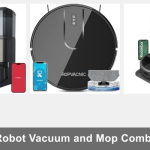
Robot vacuums Best as a maintenance tool between deeper cleans, not a full replacement for one — especially in homes with pets, heavy carpet, or lots of clutter/cords on the floor that can jam the robot. Excellent for keeping hard floors and low-pile carpet consistently clean with minimal effort.
A practical approach many households land on: a corded upright or canister for weekly deep cleaning, paired with a stick vacuum or robot for daily touch-ups.
4. Corded vs. Cordless: The Real Trade-offs
This decision comes down to a genuine trade-off, not a clear winner.
| Factor | Corded | Cordless |
|---|---|---|
| Run time | Unlimited | Typically 20–60 minutes per charge |
| Suction consistency | Stays constant | Often decreases as battery drains |
| Maneuverability | Limited by cord length/outlets | Fully free movement |
| Best for | Large homes, deep cleans | Small spaces, quick cleanups, stairs |
| Maintenance | Simpler (no battery to replace) | Battery degrades over 2–4 years |
For homes larger than roughly 1,500–2,000 square feet, relying solely on a cordless model often means multiple charging breaks mid-clean, which is worth factoring in before buying.
5. Bagged vs. Bagless
Bagged vacuums
- Better for allergy sufferers, since dust is sealed away when the bag is removed rather than released back into the air
- Generally maintain more consistent suction as the bag fills, up to a point
- Ongoing cost of buying replacement bags
- Bag availability can become an issue years down the line if a model is discontinued
Bagless vacuums
- No recurring bag cost
- You can see exactly how full the bin is
- Emptying can release a cloud of fine dust, which matters for allergy sufferers
- Filters need more frequent cleaning to maintain performance
If allergies are a real concern in your household, a bagged model with sealed filtration is generally the safer choice.
6. Suction Power: What the Numbers Actually Mean
Manufacturers list suction specs in different units — air watts, kilopascals (kPa), or amps — and these numbers are notoriously easy to misread as a simple “bigger is better” comparison.
- Air watts (AW) measure actual cleaning performance (airflow combined with suction) and are the most useful figure for comparison, when available.
- Amps measure electrical power draw, not cleaning performance — a higher amp rating doesn’t guarantee stronger suction.
- kPa is common on cordless and robot vacuums and measures suction force at the nozzle.
Beyond the spec sheet, suction on carpet depends heavily on how well the brush roll seals against the floor and how efficiently the machine’s airflow path is designed — which is why two vacuums with similar official numbers can perform very differently in practice. Reading real-world reviews for carpet performance specifically is more reliable than comparing spec sheets alone.
7. HEPA Filtration and Allergies
For households with allergy or asthma concerns, filtration matters as much as suction power.
- True HEPA filters capture 99.97% of particles down to 0.3 microns — look specifically for “True HEPA” or “HEPA-certified,” since “HEPA-type” or “HEPA-like” filters are a lower, non-certified standard.
- Sealed system design matters just as much as the filter itself — if air leaks out around the bin, hose, or seals instead of passing through the filter, allergens escape regardless of filter quality.
- Exhaust filtration specifically (as opposed to just intake filtration) is what determines whether the air blown back into the room is actually clean.
If allergies are a primary concern, look for a vacuum explicitly marketed as “allergy-certified” by an asthma or allergy foundation, rather than assuming any HEPA filter accomplishes the same thing.
8. Weight and Maneuverability
This factor gets overlooked until move-in day, but it affects how often you’ll actually use the vacuum.
- Uprights typically weigh 12–20 lbs (5.5–9 kg)
- Canisters feel lighter to push since only the wand and head move, even though total unit weight can be similar
- Stick vacuums typically weigh 4–8 lbs (1.8–3.6 kg)
- Stairs are significantly easier with a lightweight stick vacuum or a canister’s detachable wand than with a full-size upright
If you have multiple flights of stairs, or anyone in the household has mobility or strength limitations, weight should be weighted (no pun intended) more heavily than raw suction power.
9. Attachments and Accessories Worth Having
Not every attachment that comes in the box is actually useful day-to-day. These are the ones worth prioritizing:
- Crevice tool — for edges, baseboards, and between couch cushions
- Upholstery brush — for furniture and mattresses
- Motorized mini brush — essential for pet hair on upholstery and stairs; a standard (non-motorized) tool struggles with embedded hair
- Extension wand — for ceiling corners, curtains, and high shelves
- Combination floor brush — for switching between hard floor and rug settings without changing tools
Attachments that are rarely worth prioritizing: overly specialized tools (like separate mattress-only attachments when an upholstery brush does the job) that mostly just add storage clutter.
10. Noise Level
Vacuum noise is measured in decibels (dB), and the difference between models is more noticeable than the numbers suggest, since decibels are a logarithmic scale.
- Under 70 dB: Noticeably quiet, comparable to normal conversation
- 70–80 dB: Typical range for most consumer vacuums
- 80+ dB: Loud enough to be genuinely disruptive, especially in apartments or homes with sleeping infants
If you live in an apartment, have young children who nap, or plan to vacuum early morning or late evening, checking the decibel rating before buying avoids a common source of buyer’s remorse.
11. Storage Space and Home Size
- Small apartments: Favor stick vacuums or compact canisters that can be stored in a closet without dedicated floor space.
- Larger homes: An upright with a larger bin reduces how often you need to stop and empty it mid-clean.
- Homes with limited closet space: Some upright models now come in slimmer, wall-mountable designs specifically to address this.
Measuring your actual storage spot before buying — not just assuming “it’ll fit somewhere” — avoids a surprisingly common return reason.
12. Budget Tiers: What You Get at Each Price Point
Under $150: Reliable basic performance for small to medium homes with light cleaning needs. Fewer advanced features (no auto floor-sensing, more basic filtration), but perfectly adequate for straightforward use cases.
$150–$400: The sweet spot for most households. This range typically includes better filtration, longer cordless battery life, more durable brush rolls, and pet-specific features.
$400–$700: Premium build quality, advanced filtration, smart features (app connectivity, floor mapping for robots), and generally longer product lifespans.
$700+: Top-tier suction performance, longest cordless run times, and the most advanced filtration and smart-home integration — worth it primarily for large homes, heavy pet households, or households with severe allergies where performance differences at the margin genuinely matter.
Spending more doesn’t always mean better suited to your specific home — a $700 vacuum optimized for large carpeted homes isn’t automatically the right choice for a 600-square-foot apartment with hard floors.
13. Brand Reliability and Warranty
- Warranty length varies widely, from 1 year on budget models to 5+ years on premium ones — a longer warranty is often a genuine signal of manufacturer confidence in the build.
- Parts availability matters more than people expect. A cheap vacuum with no replacement belts or filters available after a year effectively becomes disposable.
- Read reviews focused specifically on durability after 1–2 years of use, not just initial unboxing impressions, since suction performance and reliability issues often only show up with sustained use.
14. Common Buying Mistakes to Avoid
- Buying based on suction spec alone, ignoring real-world carpet/hard-floor performance reviews
- Choosing a cordless-only model for a large home, then discovering mid-clean battery breaks are a constant frustration
- Skipping pet-specific features despite having pets, then dealing with constant brush roll jams
- Underestimating storage space needed, especially for uprights and canisters
- Ignoring noise ratings in noise-sensitive households
- Assuming “HEPA-type” filters perform the same as certified True HEPA filters
15. Final Checklist Before You Buy
Before finalizing a purchase, confirm:
- Matches your primary flooring type (carpet, hard floor, or mixed)
- Appropriate for pet hair volume, if applicable
- Corded or cordless fits your home size and cleaning habits
- Bagged or bagless matches your allergy considerations
- True HEPA filtration if allergies are a concern
- Weight is manageable for stairs and extended use
- Comes with (or can add) the attachments you’ll actually use
- Noise level fits your household’s schedule
- Fits your available storage space
- Warranty length and parts availability are reasonable for the price paid
Final Thoughts
There’s no single “best vacuum” — only the vacuum that’s best matched to your specific flooring, household, and cleaning habits. Working through flooring type, pet situation, and corded-vs-cordless first narrows the field dramatically before suction specs or brand names even enter the conversation. Getting those fundamentals right upfront leads to a purchase that performs well for years, rather than one that looks impressive on a spec sheet but underdelivers in your actual home.