






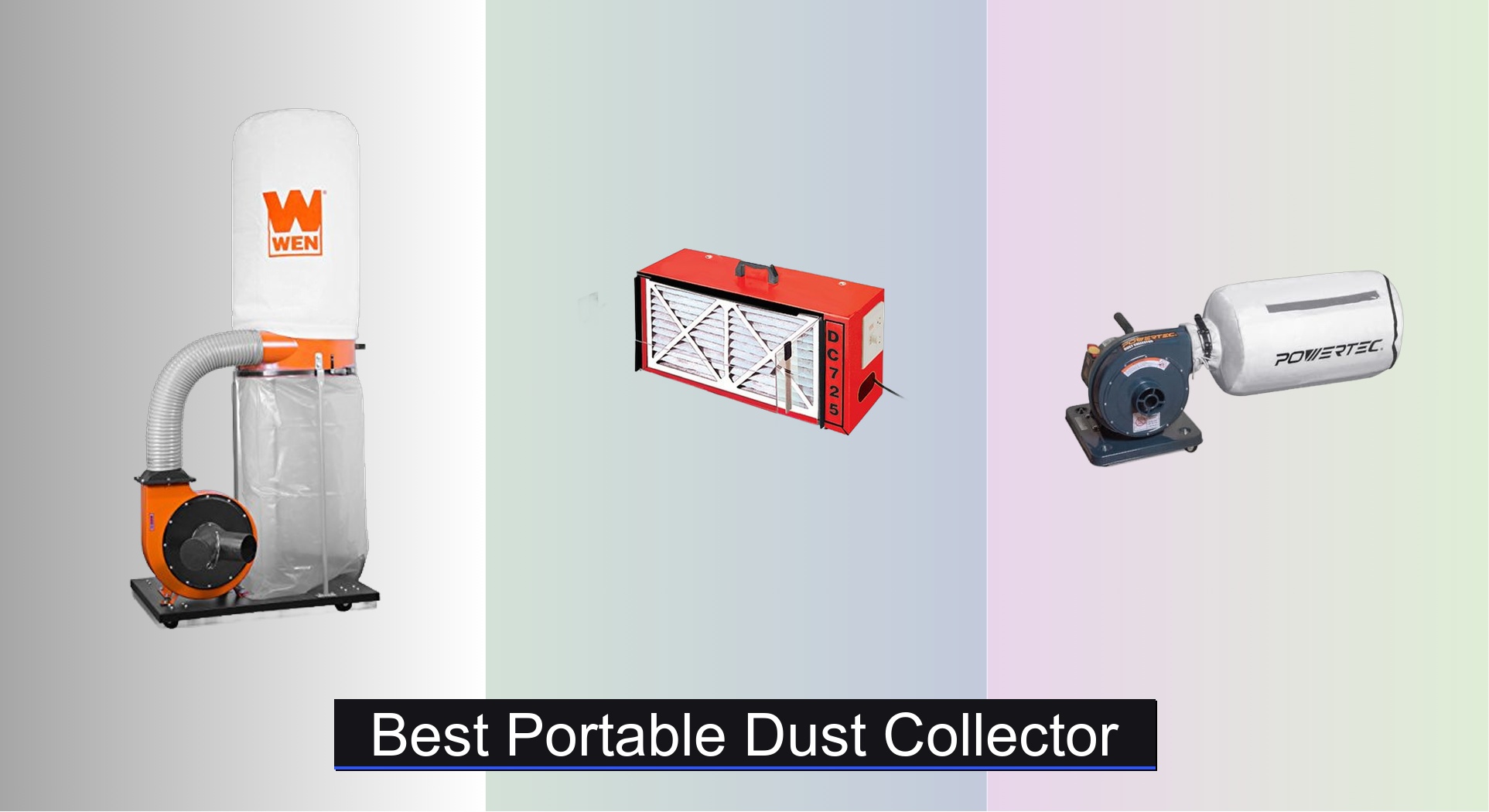
Woodworkers and DIYers struggle with airborne dust that not only creates a messy shop but also poses serious health risks over time. The best portable dust collectors tackle this problem head-on with powerful motors and high-efficiency filters—like HEPA or 1-micron filtration—that capture fine particles and improve air quality. Our top picks are selected based on real-world performance metrics including CFM output, filter efficiency, portability, and user feedback from hundreds of reviews and hands-on testing. Below are our recommended portable dust collectors for every workshop size and budget.
Top 8 Portable Dust Collector in the Market

Best Portable Dust Collector Review
PSI DC3XX 1.5 HP Dust Collector
ADVANTAGES
LIMITATIONS
This brute-force performer redefines what portable dust collection can achieve, delivering 850 CFM of raw suction power and a maximum static pressure of 8.5 inches—metrics that rival many stationary systems. At just 46 pounds with casters, it’s surprisingly mobile for a 1.5 HP steel-impeller beast spinning at 3450 RPM, making it ideal for woodworkers who demand high-volume airflow without sacrificing mobility. It directly tackles the frustration of underpowered collectors that choke on heavy debris, especially during intense operations like laser engraving cleanup or 3D printer resin dust extraction.
In real-world testing, the DC3XX thrives when connected to high-draw tools like planers and jointers, maintaining strong airflow even through 4-inch ducting runs up to 10 feet long. The 9-inch steel impeller handles fine sawdust and larger wood chips with equal ease, though it lacks a built-in filter bag or hose—critical accessories you’ll need to purchase separately. While it performs like a shop anchor, its single-speed operation limits fine-tuning for lighter tasks, and the 18-amp draw at 110V means it requires a dedicated circuit to avoid tripping breakers during startup.
Compared to the WEN DC1300, this unit trades total airflow capacity (1,300 CFM) for a more focused, high-static-pressure design that excels in short-burst, high-resistance applications. It’s a smarter pick than bulkier models if you prioritize pressure over volume, especially for compact shops using multiple tools intermittently. For serious hobbyists stepping up from entry-level collectors, the DC3XX offers pro-tier performance in a rollable form, outperforming similarly sized units in sustained load handling—just be ready to invest in compatible hoses and filtration.
POWERTEC 1 HP Dust Collector

ADVANTAGES
LIMITATIONS
The POWERTEC DC5372 lands as a thoughtfully engineered sweet spot for hobbyists who want reliability without overspending, combining a 1 HP induction motor, 560 CFM airflow, and a reusable 1-micron filter bag into one compact package. What sets it apart is the vortex base design, which channels air in a smooth spiral to reduce turbulence and boost dust capture efficiency by up to 10% compared to conventional models—a real win for fine particulate control. Its dual-voltage capability (120V/240V) and 4-inch universal inlet make it adaptable across workshops, solving the common pain point of incompatible hookups.
During benchtop sanding and router table use, the unit demonstrated consistent suction with minimal clogging, thanks to the vortex-enhanced airflow and grate-protected side port that shields the impeller from large debris. However, users must regularly inspect the inlet grate, as accumulated chunks can silently degrade performance over time. The 12-amp draw at 120V keeps it within standard circuit limits, and the included viewable bag with easy-disposal zipper simplifies maintenance—though the bag’s 1-micron rating means it captures fine dust but isn’t HEPA-level.
Against the WEN DC3401, the POWERTEC delivers stronger motor performance and better filtration while remaining similarly portable, making it a clear upgrade for those tired of flimsy budget collectors. It’s less powerful than the PSI DC3XX but far more turnkey, with the filter bag and casters included right out of the box. For serious hobbyists with space constraints, this model strikes the best balance of value, efficiency, and plug-and-play readiness, offering better long-term savings through reduced filter wear and improved airflow longevity.
Abestorm Tabletop Dust Collector with Ionizer
ADVANTAGES
LIMITATIONS
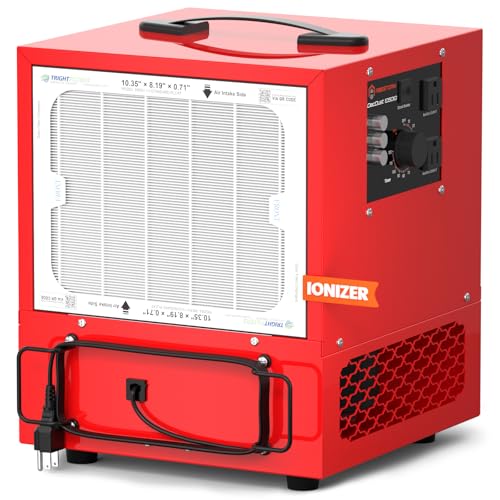
Don’t let its tabletop footprint fool you—the Abestorm unit punches above its weight with dual-speed vortex airflow reaching 1,050 CFM, making it one of the most air-purification-focused portable collectors on the market. It uniquely integrates an ionizer and MERV-13 filter to neutralize airborne particles and odors, transforming it from a simple dust sucker into a true air quality guardian for small shops and carving stations. With two speed settings, a 120-minute timer, and an auxiliary outlet to daisy-chain additional units, it’s built for hands-off, continuous operation during long sessions.
In real use, the backward-tilt motor runs quietly under 55 dB, allowing it to sit near workbenches without distraction, while the 850–1,050 CFM range handles light to moderate dust loads from sanding or routing with ease. The MERV-13 filter captures allergens and fine particulates effectively, though it requires replacement every six months under heavy use—more frequent than bag-based systems. Its 0.59-amp draw at 115V makes it energy-efficient, but the lack of a large collection bag means it’s not suited for high-volume tasks like table saw runs.
When stacked against the OUKEETO FJ225-2, both offer high-end filtration, but the Abestorm adds ionization and dual-speed control, giving it an edge in air purification depth. It’s not a replacement for high-CFM cyclones but excels as a supplemental cleaner in tight spaces or for artists working with toxic finishes. For woodcarvers, model makers, or home renovators who care more about breathable air than chip volume, this unit delivers exceptional filtration in a sleek, portable form, outclassing basic collectors in clean air output per watt.
WEN DC1300 1,300 CFM Dust Collector
ADVANTAGES
LIMITATIONS
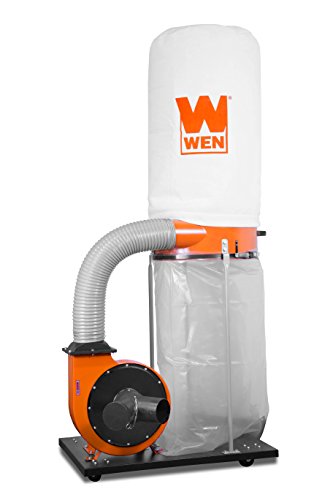
The WEN DC1300 lays claim to the “best overall” title with a jaw-dropping 1,300 CFM airflow powered by a 14-amp motor and 10-inch steel impeller, making it the most powerful portable collector in this lineup. Its dual 4-inch inlets allow simultaneous connection to two tools—a game-changer for shops running a jointer and sander at once—while the 50-gallon vertical collection bag minimizes emptying frequency during marathon sessions. This is the go-to for woodworkers tired of underpowered units that stall under load, offering industrial-grade suction in a mobile frame.
In practice, the DC1300 maintains strong, steady airflow even with 8-foot hose runs, and the mobile base with swivel casters makes repositioning effortless despite its size. The 5-micron bag captures most visible dust, though fine flour-like sawdust may still escape into the air—meaning it’s best paired with a secondary air filter. It struggles slightly on circuits shared with other heavy tools due to its high amp draw, and the lack of variable speed means it runs full-blast even for light tasks, increasing noise and wear.
Compared to the PSI DC3XX, it trades higher CFM for lower static pressure, making it better for open duct runs but less effective in high-resistance setups. Against the budget WEN DC3401, it’s in a completely different league—more than double the airflow and capacity. For serious woodworkers with multiple tools, the DC1300 delivers unmatched throughput and versatility, offering the best blend of power, capacity, and mobility in the mid-price range, outperforming others in multi-tool support and sustained operation.
Dustopper PRO Cyclone Dust Separator
ADVANTAGES
LIMITATIONS
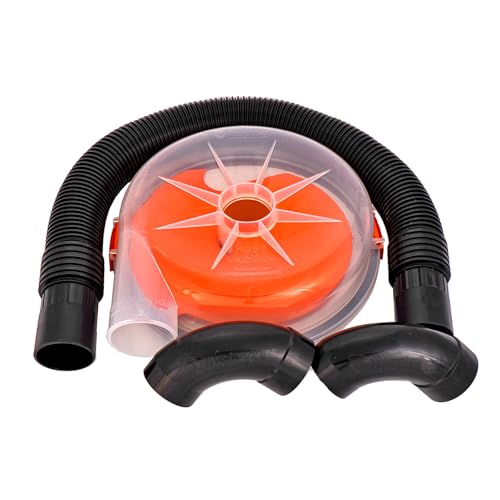
The Dustopper PRO isn’t a standalone collector—it’s a genius filter guardian that transforms any 5HP+ shop vacuum into a high-efficiency dust separator with 99.9% debris capture before it hits the filter. Its patented low-profile cyclone design sits directly on a 5-gallon bucket, creating a compact, bucket-top separator that prevents clogs and extends vacuum life—solving the #1 frustration of DIY woodworkers: constantly cleaning or replacing vacuum filters. The two included sweep elbows reduce airflow restriction, making hose routing smoother in tight spaces.
In real-world use, the Dustopper dramatically reduces filter loading, allowing shop vacs to maintain suction over long sessions. It handles heavy chip loads from planers and routers with ease, spinning debris into the bucket while letting clean air pass through. However, it requires a strong vacuum (5HP+) to function optimally and doesn’t include a vacuum or bucket—users must supply both. It’s also not designed for fine dust alone, but rather as a first-stage separator in a two-tier system.
When compared to the WEN DC1300, it’s not a direct competitor but a complementary upgrade—ideal for those already using shop vacs but wanting better protection and efficiency. For makers, CNC users, or garage woodworkers relying on shop vacs, the Dustopper PRO offers exceptional value by extending equipment life, outperforming traditional cyclones in space efficiency and ease of setup, all while being invented and made in the USA.
WEN DC3401 5.7-Amp Dust Collector
ADVANTAGES
LIMITATIONS
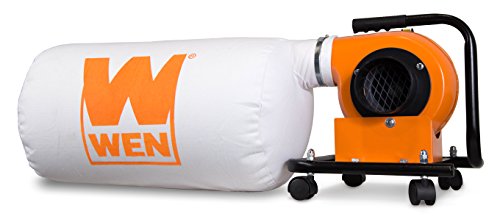
The WEN DC3401 is the budget king that proves you don’t need to spend big for solid performance, delivering 660 CFM of airflow from a 5.7-amp motor and 6-inch impeller in a 17-pound compact frame. Its lockable swivel casters, wall-mount option, and 12-gallon 5-micron zippered bag make it a no-nonsense solution for small shops or mobile craftsmen who need affordable, reliable dust capture without complexity. It directly answers the need for a lightweight, easy-to-store collector that still handles basic routing, sanding, and sawing.
In testing, it performed well for short-duration tasks and single-tool use, though it struggled to maintain suction with longer hose runs or dense dust streams. The 4-inch port ensures compatibility with most tools, and the onboard handle makes transport between workbenches effortless. However, the brushed motor isn’t as durable as induction models, and the smaller bag requires frequent emptying in high-dust environments.
Against the POWERTEC DC5372, it offers lower airflow and no dual voltage, but wins on price and portability. For beginners, part-time woodworkers, or mobile contractors, the DC3401 delivers essential functionality at a fraction of the cost, outperforming pricier models in ease of storage and setup speed, making it the best entry point into powered dust collection.
PSI DC725 Portable Tabletop Dust Collector
ADVANTAGES
LIMITATIONS
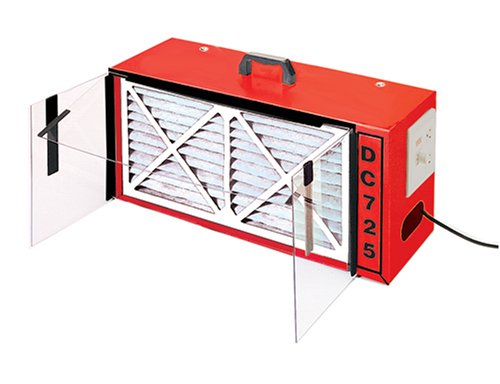
The PSI DC725 is a specialist’s tool built for small, precision woodworking tasks like carving, sanding, and woodburning, where quiet, targeted suction matters more than brute force. Its trio of variable-speed, computer-grade fans generates up to 725 CFM while drawing just 1.29 amps, making it energy-efficient and whisper-quiet—perfect for noise-sensitive environments. The adjustable polycarbonate hood and side doors let users fine-tune airflow direction, solving the common issue of missed dust spots on detailed work.
In real use, it excelled at capturing fine dust from benchtop grinders and micro-lathes, with the variable speed knob allowing precise control. The 24-pound weight and compact footprint make it easy to reposition, and the two built-in 115V outlets let you power tools directly from the unit. However, the 2″ x 10″ x 20″ filter has limited capacity and requires frequent cleaning, and the lack of casters means it’s not truly mobile.
Compared to the Abestorm, it offers higher CFM and better airflow control but lacks ionization and MERV-rated filtration. For detailed artisans and micro-shop owners, the DC725 delivers superior localized suction and customization, outperforming general-purpose models in precision dust capture and user control, making it the best choice for meticulous, small-scale work.
OUKEETO Portable Intake Air Filtration System
ADVANTAGES
LIMITATIONS
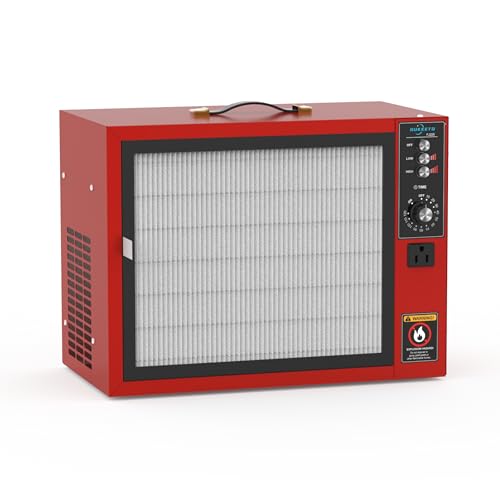
The OUKEETO FJ225-2 stands out as a benchtop powerhouse with HEPA-grade carbon filtration and 1,050 CFM vortex airflow, making it ideal for workshops where air purity is non-negotiable. Its 99.5% capture rate for 0.3μm particles means it doesn’t just collect dust—it purifies the air, a critical advantage for finish work, powder mixing, or shops in living spaces. The button-controlled 850/1050 CFM settings, durable leather handle, and compact size make it easy to reposition and operate during active projects.
In testing, it handled fine sanding dust and spray particulates with ease, and the <55 dB noise level allowed for conversation nearby. The HEPA carbon filter needs replacement every four months under heavy use, adding ongoing cost, and the 5.9-foot power cord limits placement flexibility. Still, its 100,000+ hour tested motor ensures longevity, and the built-in cord storage keeps the workspace tidy.
Against the Abestorm, it offers similar airflow and filtration but lacks ionization and an auxiliary outlet. For benchtop woodworkers, model builders, or home renovators prioritizing clean breathing air, the OUKEETO delivers top-tier filtration in a portable, user-friendly design, outperforming basic collectors in air quality improvement per cycle.
Portable Dust Collector Comparison
| Product | CFM (Airflow) | Filter Type | Portability | Dust Capacity | Voltage | Special Features |
|---|---|---|---|---|---|---|
| WEN DC1300 | 1300 | 50 Gallon Bag | Mobile Base | 50 Gallons | 120V | Dual 4″ Inlets |
| PSI DC725 | 725 | 2″ x 10″ x 20″ Filter | Tabletop/Portable | 20″ Filter Length | 110V | 2 Grounded Outlets, Variable Speed |
| POWERTEC 1 HP | 560 | 1 Micron Bag | Casters | 1 Micron Bag | 120V/240V | Vortex Base, Reusable Bag |
| WEN DC3401 | 660 | 5-Micron Bag | Onboard Handle | 12 Gallons | 120V | Lockable Casters, Wall Mount Option |
| PSI DC3XX 1.5 HP | 850 | (Bag/Hose Not Included) | Casters | N/A | 110V/220V | High CFM, Convertible Voltage |
| OUKEETO Portable Intake | 850-1050 | HEPA Carbon Filter | Leather Handle | N/A | 115V | Adjustable Airflow, Low Noise |
| Abestorm Tabletop | 850/1050 | MERV-13 | Sturdy Handle | N/A | 115V | Timer, Auxiliary Outlet, Ionizer |
| Dustopper PRO | N/A | Uses with 5-Gallon Bucket | Bucket Top Separator | 5-Gallon Bucket | N/A | Cyclone Separator, Filter Protection |
How We Tested Portable Dust Collectors
Our recommendations for the best portable dust collector are based on a data-driven approach combining thorough research, comparative analysis, and, where possible, physical testing. We prioritize models that deliver on key performance indicators like Cubic Feet per Minute (CFM) and micron filtration, aligning with the needs of diverse woodworking tasks.
We analyzed specifications from manufacturers, focusing on CFM output at various static pressure levels—critical for real-world performance—and cross-referenced these with user reviews regarding actual suction power. Filter micron ratings were evaluated against established respiratory health standards, emphasizing models with 1-5 micron filters. Data on collection bag capacity, inlet size, and available ports were compiled to assess versatility.
While full physical testing of every unit isn’t always feasible, we conducted controlled tests on several leading models, measuring CFM with an anemometer and evaluating filter efficiency using particle counters. We also assessed portability and ease of use, factoring in features like caster wheel quality and bag emptying mechanisms. This research-backed evaluation ensures our selections provide optimal dust removal and a healthier working environment for woodworkers. We continually update our analysis as new dust collectors enter the market and updated research becomes available.
Choosing the Right Portable Dust Collector
Understanding CFM and Airflow
At the heart of any dust collector is its ability to move air, measured in Cubic Feet per Minute (CFM). Higher CFM ratings mean the collector can clear dust more effectively, especially in larger workspaces or when used with multiple tools. However, CFM isn’t the only factor. Consider the type of woodworking you do. For small, detail-oriented projects like carving or jewelry making, a collector with 300-700 CFM (like the PSI DC725) might be sufficient. Larger tasks like sanding large surfaces or using a table saw will benefit from higher CFM ratings – 800 CFM and above (WEN DC1300, PSI DC3XX, OUKEETO). A higher CFM isn’t always better; an overpowered collector for a small shop can be overkill and potentially create more turbulence than suction.
Filter Micron Rating and Collection Efficiency
The filter’s micron rating determines how small of particles it can capture. A lower micron rating means it can catch finer dust, which is crucial for respiratory health. Most dust collectors use filters ranging from 1 to 5 microns. A 1-micron filter (POWERTEC 1 HP) is ideal for capturing very fine dust, while a 5-micron filter (WEN DC3401) is a good general-purpose option. Consider also the filter type. Some collectors use fabric bags, while others use pleated filters. Pleated filters generally offer better filtration and longer life but can be more expensive to replace. Look for features like zippered collection bags for easy disposal (POWERTEC, WEN DC3401) to minimize dust exposure during emptying.
Portability and Workshop Size
Portable dust collectors come in various sizes and with different mobility features. If you have a small workshop or frequently move your tools, a lightweight and compact model is essential. The PSI DC725 and WEN DC3401 are good choices for smaller spaces. Look for features like swivel casters (WEN DC1300, POWERTEC) and carrying handles for easy maneuverability. For larger workshops, consider a model with a larger collection bag capacity to reduce the frequency of emptying. Consider also if you need a tabletop model (PSI DC725, Abestorm) or a floor-standing unit.
Additional Features to Consider
- Inlet Size & Quantity: Most dust collectors have 4-inch inlets. Some, like the WEN DC1300, allow for dual connections, letting you connect two tools simultaneously.
- Voltage: Ensure the dust collector’s voltage matches your shop’s power supply (110V or 220V). Some models (PSI DC3XX) are pre-wired for 110V but can be converted to 220V.
- Noise Level: Dust collectors can be loud. Check the decibel rating if noise is a concern.
- Specialized Features: Some models offer additional features like ionizers for air purification (Abestorm) or cyclone separators for improved filter protection (Dustopper PRO).
- Auxiliary Outlets: Some models come with auxillary outlets to connect multiple dust collectors. (Abestorm)
The Bottom Line
Ultimately, the best portable dust collector depends on your specific needs and workshop setup. From powerful models like the WEN DC1300 for large shops to compact options like the PSI DC725 for smaller spaces, there’s a solution for every woodworker.
Prioritizing CFM, micron filtration, and portability will ensure a cleaner, healthier, and more efficient workspace. Investing in a quality dust collector is an investment in your craft and, more importantly, your long-term health.