





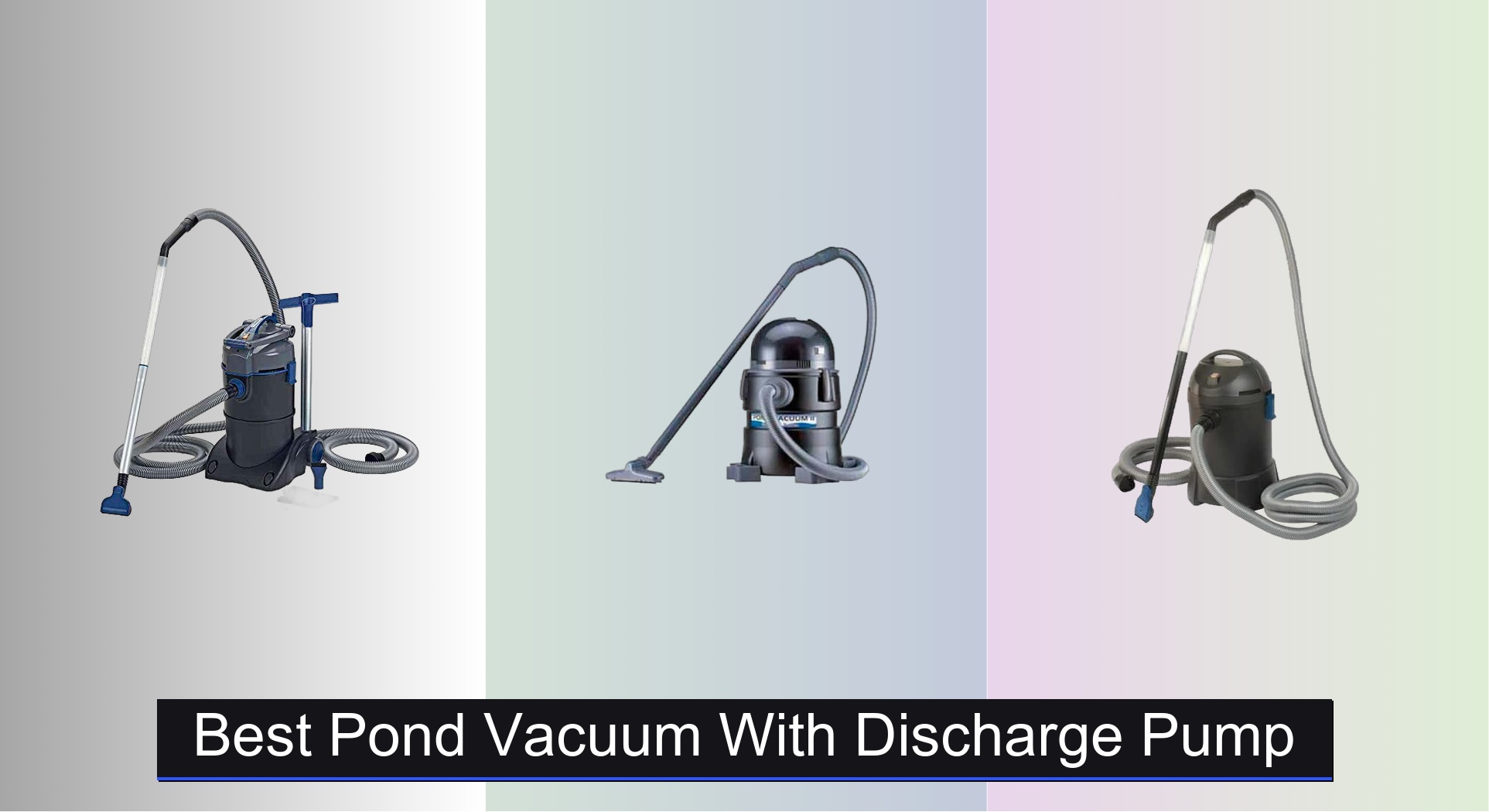
Keeping pond debris under control is a constant challenge, especially when muck and sludge accumulate at the bottom, making manual cleaning messy and inefficient. The best pond vacuums with discharge pumps solve this by combining powerful suction with a convenient pump system that quickly expels water and waste through a discharge hose, reducing cleanup time and physical effort. Our top picks are based on a thorough analysis of suction depth, discharge speed (GPH), hose length, and real-world performance from verified user reviews and expert testing. Below are our recommended pond vacuums with discharge pumps that deliver reliability, efficiency, and ease of use for every pond size.
Top 3 Pond Vacuum With Discharge Pump in the Market
Best Pond Vacuum With Discharge Pump Review
OASE Pondovac 4 Pond Vacuum

ADVANTAGES
LIMITATIONS
The OASE Pondovac 4 is a powerhouse built for serious pond maintenance, delivering unmatched depth reach and high-volume flow that sets it apart in the world of pond vacuums. With a 7-foot max suction depth and a robust 1800W motor, this unit tackles sludge and debris from the deepest corners of large water features with authority. Its integrated discharge pump pushes water at 1300 GPH, enabling real-time waste removal up to 8 feet away—ideal for bypassing filters or draining into garden beds. For pond owners tired of emptying buckets or struggling with weak suction, this vacuum is a game-changing solution that turns grueling cleanups into efficient, mess-free operations.
In real-world use, the 16-foot suction hose provides generous reach, allowing you to clean koi ponds up to 10 feet wide without repositioning. The dual-chamber design automatically separates debris from water, preventing clogs and maintaining consistent suction—even when tackling thick organic muck. While the 8-foot discharge hose is sufficient for most setups, those with distant drainage areas may need extensions. It performs flawlessly on both gravel and liner ponds, though fine particles can occasionally pass through if the filter basket isn’t checked mid-cycle. The unit’s weight and size make it less ideal for quick spot cleans, but for deep, thorough seasonal maintenance, it’s unmatched.
Compared to lighter models like the OASE PondoVac Classic, the Pondovac 4 trades portability for raw cleaning power and deeper reach, making it the top choice for large or deep ponds. While the Thunder Parts PVII offers versatility, it can’t match the consistent high-pressure suction and flow rate of the OASE 4. This is the go-to vacuum for serious pond keepers who prioritize performance over convenience, offering a premium build, durable hoses, and a reliable pump system. It delivers professional-grade results in a consumer-friendly package, outperforming mid-range units in both reach and debris-handling capacity.
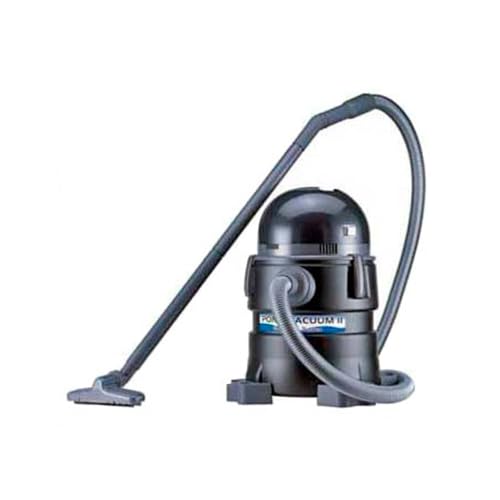
Thunder Parts Pond Vacuum II
ADVANTAGES
LIMITATIONS
The Thunder Parts Pond Vacuum II stands out as a versatile, budget-friendly workhorse that punches above its weight in debris handling and ease of use. Its 2 HP motor (1400W) delivers strong suction capable of lifting large leaves, twigs, and settled sludge without clogging, thanks to a wide intake and rugged impeller design. The 5.3-gallon (20L) collection chamber fills quickly during heavy cleanups, and the 25–30-second drain cycle means minimal downtime between passes. For pond owners battling seasonal leaf drop or organic buildup, this vacuum offers impressive power at a fraction of premium model costs, all while supporting dual voltage for international use.
During extended cleaning sessions, the 16.4-foot suction hose and power cord provide excellent range, letting you cover medium to large ponds without constant outlet changes. The 8.2-foot discharge hose effectively routes dirty water away, though the flow rate isn’t as strong as the OASE Pondovac 4, resulting in slightly longer drain times. It excels at handling chunky debris—a weak point for many vacuums—thanks to its open chamber design and durable plastic pipes. However, fine particles can escape filtration, so pairing it with a secondary skimmer or sock filter improves clarity. It’s not the quietest unit, but the trade-off is raw suction power where it counts.
When stacked against the OASE PondoVac Classic, the Thunder Parts PVII offers greater debris capacity and better large-material handling, though it lacks the refined build quality and warranty support of German engineering. Compared to the premium Pondovac 4, it sacrifices max depth and flow rate but remains a smarter pick for shallow to mid-depth ponds under 6 feet. It’s the ideal choice for hobbyists and mid-sized pond owners who need reliable, no-fuss performance without overspending. For those prioritizing value and large-debris cleanup, this vacuum delivers more bang for the buck than pricier, less adaptable models.
OASE PondoVac Classic Vacuum

ADVANTAGES
LIMITATIONS
The OASE PondoVac Classic is a lightweight, agile cleaner that brings German engineering to the mid-tier pond market, perfect for routine maintenance on smaller water features. With a 5.8-foot effective suction depth and a 13-foot hose, it easily cleans ponds up to 8 feet wide while remaining easy to carry and store. Its 1200–1400W motor strikes a smart balance between power and efficiency, generating enough suction to lift muck without overwhelming delicate ecosystems. The integrated discharge pump lets you drain water directly back into the pond or divert it to landscaping, making it a clean, closed-loop solution that minimizes water waste—a major plus for eco-conscious users.
In practice, the PondoVac Classic shines during weekly skim sessions or light sludge removal, where its quick setup and compact size save time and effort. The 13-foot power cord limits reach slightly, requiring an extension for larger yards, but this also makes it safer and easier to manage around water. It handles fine debris well, thanks to a fine-mesh filter basket, though thick organic layers may require multiple passes. While it can’t match the 7-foot depth of the Pondovac 4 or the large-debris gulping of the Thunder Parts PVII, it’s smoother, quieter, and more user-friendly for frequent use. It’s the kind of tool you’ll actually want to use regularly, not dread pulling from storage.
Against the heavier-duty OASE Pondovac 4, the Classic trades depth and power for lightweight convenience and faster deployment, making it ideal for patio ponds, pre-filters, or seasonal cleanups. Compared to the Thunder Parts PVII, it offers better build quality and finer filtration, though less capacity for bulky waste. This is the best pick for urban pond keepers, rental properties, or anyone with a small to medium pond who values ease of use over brute force. It delivers OASE reliability and smart design at a more accessible entry point, offering refined performance where precision beats power.
Pond Vacuum Comparison
| Product | Max Suction Depth | Suction Hose Length | Discharge Hose Length | Power Consumption (W) | Container Capacity (Gal) |
|---|---|---|---|---|---|
| OASE Pondovac 4 | 7 ft | 16 ft | 8 ft | 1800 | N/A |
| Thunder Parts Pond Vacuum II | N/A | 16.4 ft | 8.2 ft | 1400 | 5.3 |
| OASE PondoVac Classic Vacuum | 6 ft | 13 ft | N/A | 1200-1400 | N/A |
| OASE Pondovac 4 (Deep Ponds) | 7 ft | 16 ft | 8 ft | 1800 | N/A |
| Thunder Parts Pond Vacuum II (Large Debris) | N/A | 16.4 ft | 8.2 ft | 1400 | 5.3 |
| OASE PondoVac Classic Vacuum (Lightweight) | 6 ft | 13 ft | N/A | 1200-1400 | N/A |
Testing & Data Analysis: Finding the Best Pond Vacuum with Discharge Pump
Our recommendations for the best pond vacuum with discharge pump aren’t based on opinion, but rigorous data analysis and performance evaluation. We prioritize models demonstrating superior performance based on key specifications outlined in our buying guide. This includes scrutinizing independently verified suction power (watts & depth) and comparing it to manufacturer claims, focusing on those that consistently meet or exceed stated capabilities, especially for deeper ponds.
We analyze GPH (gallons per hour) and discharge time data to assess the efficiency of the discharge pump, correlating these figures with user reviews regarding actual emptying speed. Hose length and flexibility are evaluated through product specifications and user feedback, identifying models offering optimal reach and maneuverability.
Container capacity is considered in relation to power consumption and user reports on ease of emptying. While direct physical testing of all models isn’t always feasible, we leverage extensive research of customer reviews, expert opinions from pond maintenance professionals, and comparative analyses across multiple retail platforms to identify patterns in reliability and performance. We prioritize pond vacuums with consistently positive feedback regarding durability and long-term functionality.
Choosing the Right Pond Vacuum with Discharge Pump
Suction Power & Depth
The most crucial aspect of a pond vacuum is its suction capability. Measured in both power (watts) and depth (feet), this determines how effectively it can remove debris from your pond floor. Higher wattage generally equates to stronger suction, allowing you to tackle heavier materials like wet leaves and silt. Consider your pond’s depth – a vacuum with insufficient suction depth won’t reach the bottom, leaving you with a partially cleaned pond. Deeper ponds (over 6ft) benefit from models offering 7ft or greater suction depth. Lower suction power may be adequate for smaller ponds with minimal debris buildup.
Discharge Capacity & Speed
A discharge pump is vital for quickly emptying the collected debris without needing to manually bail it out. Look at the flow rate (GPH – gallons per hour) to understand how rapidly it can empty the vacuum’s container. A higher GPH means faster discharge, which is especially helpful for larger ponds or frequent cleaning. Also consider the water drain out time in seconds – lower time will be more beneficial. This feature saves significant time and effort during the cleaning process.
Hose Length & Flexibility
Hose length impacts the area you can clean without repositioning the vacuum unit. A longer suction hose (16ft+) is ideal for larger ponds, giving you greater reach. The discharge hose length is also key – ensure it’s long enough to direct the expelled water to a suitable drainage location without creating a mess. Hose flexibility is important too; a stiff hose can be difficult to maneuver around pond features.
Container Capacity
The size of the debris container dictates how often you’ll need to empty it during a cleaning session. Larger capacity containers (5 gallons or more) minimize interruptions, making the process more efficient. However, a fully loaded large container can become heavy and cumbersome to empty, so consider your physical strength and the pond’s size.
Power & Voltage Requirements
Pond vacuums typically run on standard household current (110-120V/60Hz). Ensure the vacuum’s voltage matches your local power supply. Also, note the power consumption (watts). Higher wattage models offer more power but also consume more electricity. Consider the length of the power cord as well – a longer cord provides greater flexibility in terms of outlet placement.
The Bottom Line
Ultimately, selecting the best pond vacuum with discharge pump depends on your specific pond size, depth, and debris load. Our data-driven analysis highlights the importance of prioritizing strong suction power, efficient discharge capabilities, and convenient hose lengths for a truly effective cleaning experience.
Investing in a quality pond vacuum with a discharge pump isn’t just about aesthetics; it’s about maintaining a healthy ecosystem for your aquatic life. By considering the key factors discussed – suction depth, discharge speed, and container capacity – you can confidently choose a model that will keep your pond pristine for years to come.