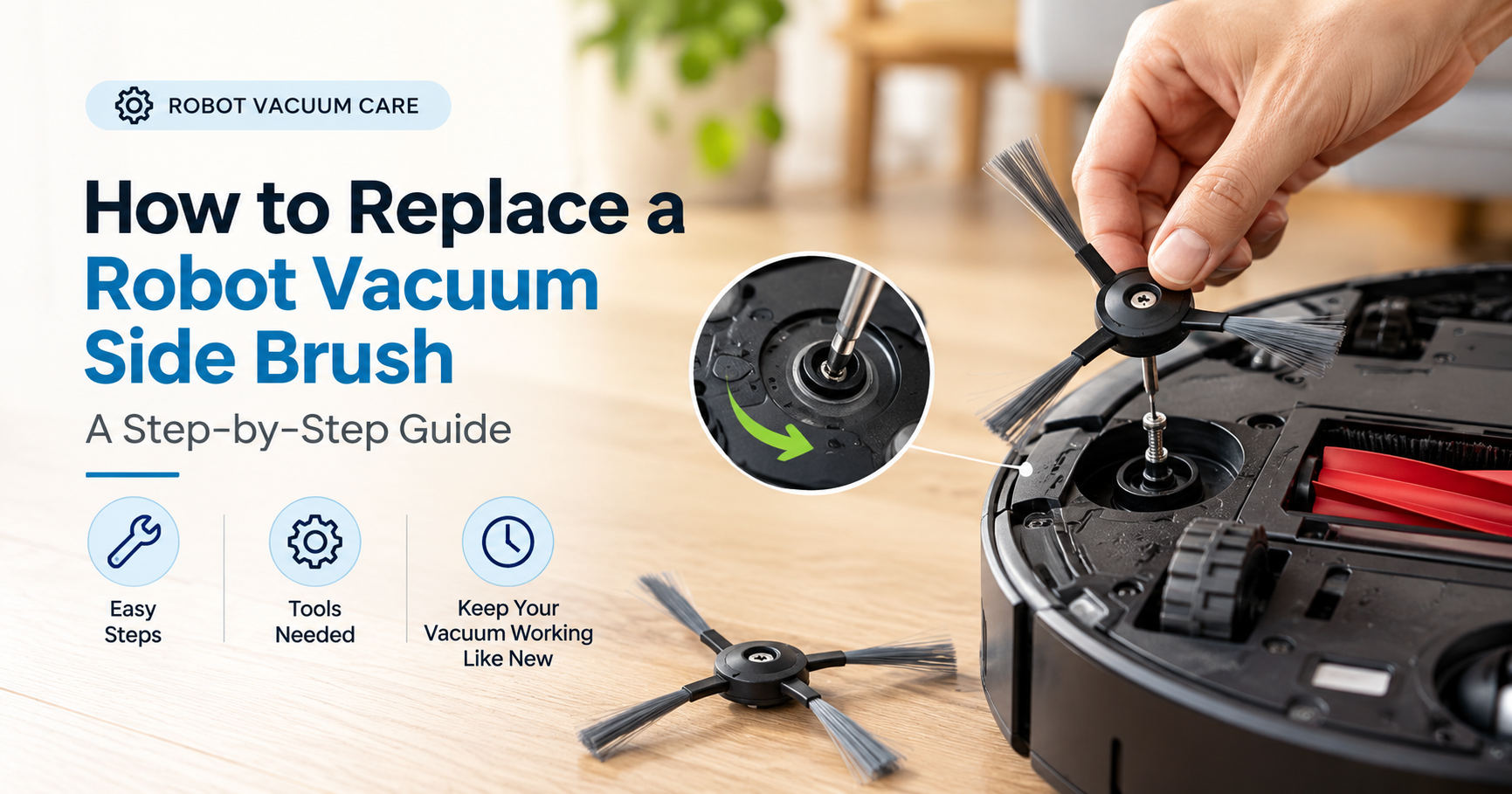


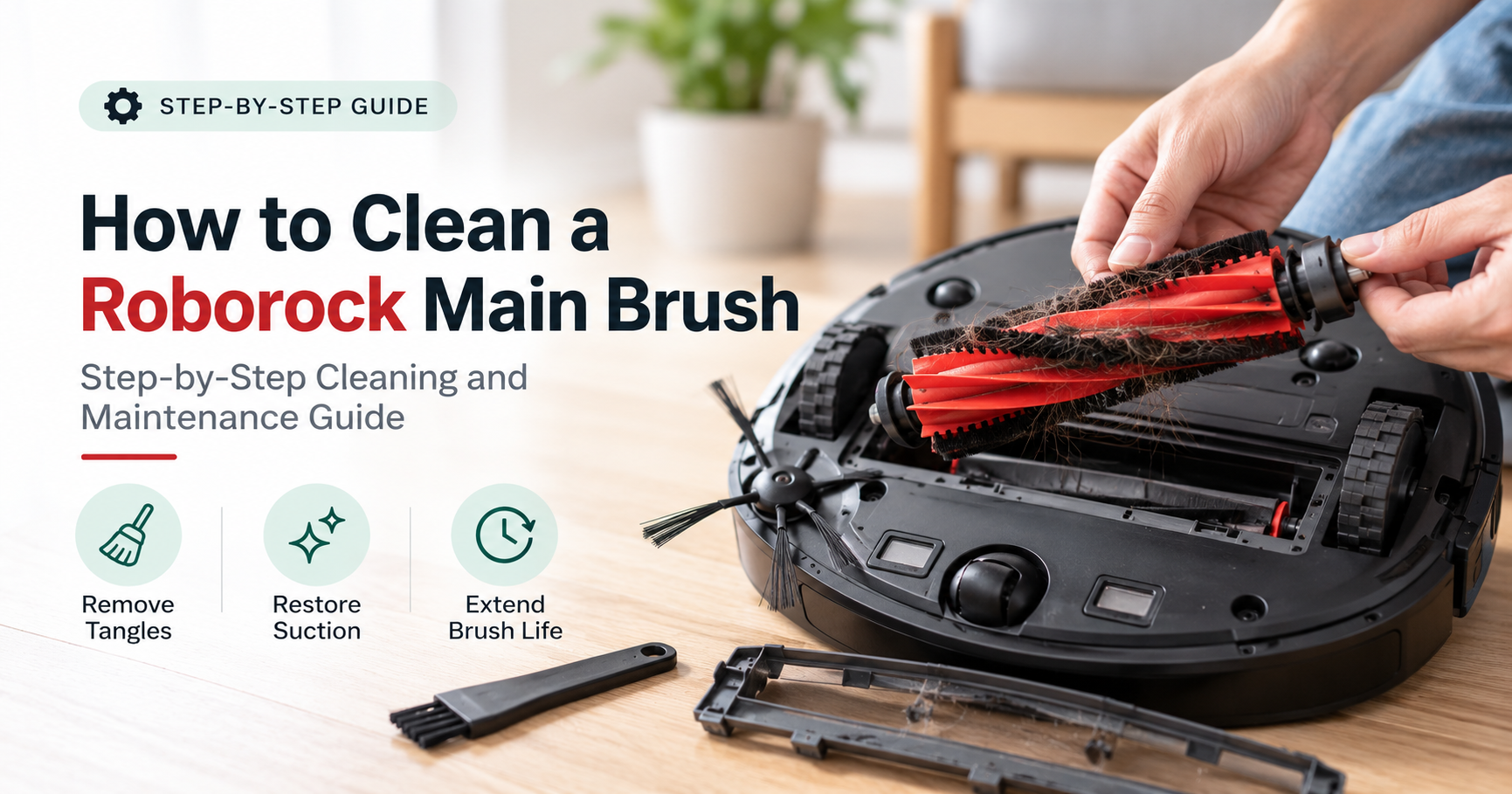

Your Roborock works hard every time it runs, and the part doing most of the lifting is the main brush. Pet hair, long hair, thread and dust all end up wound around that roller. When it gets clogged, suction drops, the robot gets noisy, and you may see a main brush error in the app.
The good news is that cleaning it takes only a few minutes. This guide shows you how to clean the Roborock main brush the right way: what you need, how often to do it, the exact steps, how to deal with stubborn hair, how to reinstall it, and when it is time to replace the brush.
Why Cleaning the Main Brush Matters
- Stronger pickup: A clean brush agitates dust and debris out of carpet and floor gaps so the suction can lift it.
- Less strain on the motor: Tangled hair adds drag, which can make the brush motor work harder.
- Fewer errors: A wrapped brush is one of the most common reasons for a stuck or entangled brush alert.
- Quieter running: Hair and grit around the bearing often cause grinding or rattling sounds.
- Longer brush life: Removing hair and grit regularly reduces wear on the fins and ends.
- Better floors: A clean brush leaves fewer streaks and missed patches.
How Often Should You Clean the Roborock Main Brush?
Roborock suggests cleaning the main brush about every two weeks and replacing it every six to twelve months, depending on use. In homes with pets, long hair or a lot of rugs, a quick check once a week is a good habit.

| Situation | Suggested cleaning | Why |
|---|---|---|
| Standard home, hard floors | Every 2 weeks | Light hair and dust build up slowly |
| Pets or long hair | Weekly | Hair wraps around the roller quickly |
| Lots of carpet or rugs | Weekly | Fibers and fluff collect on the brush |
| After vacuuming a big mess | Right away | Debris can jam the brush or bearing |
| Brush error in the app | Immediately | The brush is likely blocked or tangled |
What You Need
- The cleaning tool that came with your Roborock, which usually has a small blade for cutting hair
- Small scissors, if you do not have the tool
- A soft towel or mat to rest the robot on
- A dry, lint-free cloth and a slightly damp cloth
- A small soft brush or old toothbrush for dust in the grooves
- A trash bag for the hair
The Parts You Will Be Working With

How to Clean the Roborock Main Brush: Step by Step

Step 1: Power off and flip the robot over
Take the robot off the dock and switch it off. Turn it upside down and rest it on a towel or mat so the top and sensors do not get scratched. Place it on a stable surface where it will not roll.
Step 2: Release the main brush cover
Find the two latches on the cover over the brush chamber. Press them in and lift the cover away. Set it aside in a safe spot.
Step 3: Remove the main brush and the bearing
Lift the brush gently out of its chamber. Remove the bearing, which is the small end cap on one side of the brush. Keep it somewhere you will not lose it, since it is small.
Step 4: Cut and pull away the hair
Work along the brush with the cleaning tool. Slide the blade under strands of hair and cut across them, then pull the loose hair free. It is usually easier to cut a line along the length of the brush and unwind the hair than to try pulling it off in one piece. Check both ends of the brush carefully, since hair tends to collect at the ends and slip into the bearing area.
Step 5: Clean the bearing and the brush ends
Remove hair and grit from the bearing and the shaft ends. Tap the brush gently to shake out any dust. Use a soft brush to clear dirt from the grooves.
Step 6: Wipe the brush chamber
Clean the empty chamber with a dry cloth. Remove dust, crumbs and hair from the edges and from the vacuum opening. If there is sticky residue, use a slightly damp cloth, then dry the area.
Step 7: Check the brush for wear
Look at the fins and bristles. They should be smooth and intact. If the fins are flat, torn or missing chunks, replacement is due even if the brush is clean.
Step 8: Reinstall the bearing, brush and cover
Fit the bearing back onto the brush, set the brush into the chamber, and press the cover down until the latches click. Give the brush a gentle spin by hand to confirm it turns freely.
Washing the Brush
A dry clean is enough most of the time. If the brush is dirty or sticky, you can wash it, with a few precautions:
- Rubber brushes: These can usually be rinsed under lukewarm water, with a drop of mild soap if needed.
- Bristle brushes: Use a damp cloth rather than soaking, since bristles hold moisture.
- Bearing and end caps: Wipe them rather than soaking them.
- Avoid: Harsh chemicals, bleach, strong solvents and hot water, which can damage the material.
- Dry fully: Let the brush air dry completely, away from direct sunlight and heat, before you put it back.

Dealing with Stubborn Tangles
- Cut first, then pull: Make several cuts along the length of the brush to break the hair mat into sections.
- Work from the center out: Hair tends to be tightest in the middle, and loosest toward the ends.
- Use tweezers for threads: Fine thread and fibers can hide in the fins.
- Look inside the end caps: A single strand wrapped around the shaft can stop the brush from turning.
- Clean the chamber too: Loose hair left behind will tangle again quickly.
After Cleaning: Reset and Test
Roborock tracks how long parts have been in use. If you replaced the brush rather than just cleaning it, reset the main brush timer in the app so reminders stay accurate. Then run a short cleaning cycle and listen for smooth, even sound. A rattle or grinding noise usually means something is still caught or the bearing is not seated correctly.
Troubleshooting Common Problems
| Problem | Likely cause | What to try |
|---|---|---|
| Main brush error or entangled alert | Hair wrapped on the roller or bearing | Remove the brush, cut away the hair and clean both ends |
| Brush does not spin | Blocked bearing or cover not seated | Check the bearing, refit the cover until it clicks |
| Loud grinding or rattling | Grit or hair in the bearing area | Clean the bearing, shaft and chamber |
| Weak pickup on carpet | Worn or flattened fins | Inspect the brush and replace if worn |
| Hair keeps wrapping quickly | Long hair or pets, bristle brush | Clean weekly, consider an anti-tangle replacement |
| Streaks or missed dirt | Clogged brush or full bin | Clean the brush and empty the dustbin |
When to Replace the Main Brush
- The fins or bristles are flattened, torn or missing
- The brush is bent, warped or no longer spins smoothly
- It still leaves debris behind after a thorough cleaning
- It has been in use for six to twelve months
- The ends are worn so the brush sits loose in the chamber
Tips to Reduce Tangles
- Pick up cables, string, ribbons and socks before a cleaning run.
- Brush pets regularly to reduce loose hair on the floor.
- Fringe on rugs can wrap around a roller. Trim it or use no-go zones in the app.
- Empty the dustbin often so debris does not back up into the brush chamber.
- Run the robot more often with shorter sessions, so less hair builds up each time.
- Keep a spare brush so you can swap one in while the other is being cleaned.
Common Mistakes to Avoid
- Pulling hard on tangled hair: This can damage the brush and bearing. Cut it first.
- Forgetting the bearing: Hair hides under the cap and causes noise and jams.
- Soaking the brush for too long: Trapped moisture can cause odor and wear.
- Reinstalling a damp brush: It can spread moisture and attract dust.
- Using harsh cleaners: They can dry out or degrade the rubber.
- Ignoring wear: A worn brush leaves dirt behind no matter how clean it is.
- Skipping the cover latch click: A loose cover can rattle and let debris in.
Buying Guide: Choosing a Replacement Main Brush
- Match your exact model: Brush length and end fittings differ between models, so check the model name before buying.
- Genuine versus compatible: Genuine parts give the best fit. Compatible parts can save money, but check reviews for fit and durability.
- Anti-tangle design: Look for rubber or dual-roller styles if you have pets or long hair.
- Bearing included: Some kits include a fresh bearing or end cap, which is handy.
- Value packs: Multi-part kits that include a brush, side brushes and filters cost less per item.
- Cleaning tool: A spare tool is useful if the original has been lost.
- Return policy: Fit matters, so choose a seller that accepts returns.
Other Parts Worth Cleaning at the Same Time
- Side brush: Remove hair from around the shaft. Roborock suggests cleaning it roughly monthly.
- Dust filter: Tap out dust or rinse if it is washable, and let it dry fully before reinstalling.
- Dustbin: Empty it and wipe the inside.
- Sensors and charging contacts: Wipe them with a dry, lint-free cloth.
- Wheels: Remove hair caught around the axles and check they spin freely.
Frequently Asked Questions
Can I wash the Roborock main brush with water?
Rubber brushes can usually be rinsed with lukewarm water. Bristle brushes are better wiped with a damp cloth. Always let the brush dry completely before reinstalling.
How do I get hair out of the Roborock main brush?
Use the cleaning tool to cut across the hair, then pull it free. Check both ends and the bearing area.
How long does it take to clean the main brush?
Usually about five minutes once you are familiar with the steps.
Why does the app say the main brush is entangled?
Hair or debris has wrapped around the roller or bearing. Remove the brush and clean it thoroughly.
How often should I replace the main brush?
Every six to twelve months for most households, sooner if the fins are worn or the brush no longer cleans well.
Is it safe to cut hair with scissors?
Yes, if you are careful to cut away from the fins and your hands. The supplied cleaning tool is designed for this job.
Do I need to clean the bearing too?
Yes. Hair and grit around the bearing often cause noise and jams.
Will cleaning the brush improve battery life?
It can help. A free-spinning brush needs less effort, which reduces strain on the motor and may improve efficiency.
Final Thoughts
Learning how to clean the Roborock main brush is one of the simplest ways to keep your robot vacuum performing at its best. Power off, flip the robot, release the cover, remove the brush and bearing, cut and pull away hair, wipe the chamber, and reinstall everything until it clicks. Do it about every two weeks, or weekly if you have pets, and replace the brush when it is worn.
A few minutes of care keeps suction strong, noise low and your floors cleaner between runs.
Affiliate disclosure: Some product recommendations on this site may earn a commission at no extra cost to you.