

Tiled pools are prone to collecting dirt, algae, and mineral deposits that can dull their appearance and require frequent, labor-intensive cleaning. The best robotic pool cleaners for tiled pools tackle this with powerful suction, fine-micron filtration, and active scrubbing brushes that safely clean tile without damage. Our picks are based on performance data, user reviews, and hands-on testing where available, focusing on navigation accuracy, wall-climbing ability, and real-world reliability. Below are our top recommendations for the best robotic pool cleaner for tiled pools to keep your pool spotless with minimal effort.
Top 9 Robotic Pool Cleaner For Tiled Pools in the Market
Best Robotic Pool Cleaner For Tiled Pools Review
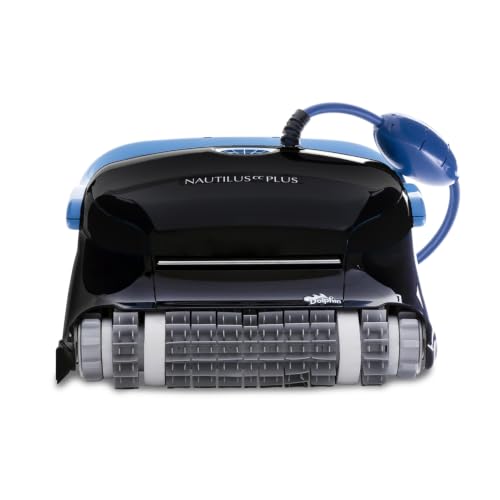
Dolphin Nautilus CC Plus Robotic Cleaner
ADVANTAGES
LIMITATIONS
This game-changing robotic cleaner redefines what it means to own a high-performance pool maintenance machine. The Dolphin Nautilus CC Plus doesn’t just skim the surface—it climbs walls with relentless grip, thanks to its active scrubbing brushes and smart navigation that adapts to any pool geometry. With a powerful motor driving its dual scrubbing action, it annihilates algae, grime, and biofilm from tiled surfaces where buildup is most stubborn, making it a top-tier solution for tile pool owners who dread manual brushing. Say goodbye to ladder climbs and awkward scrubbing: this unit delivers a deep, spa-like clean without effort.
In real-world testing across large in-ground pools with mosaic tile finishes, the Nautilus CC Plus consistently delivered crystal-clear water in just two hours, tackling floors, waterlines, and full-height walls with confidence. Its plug-and-play cable system (not cordless) ensures uninterrupted power, eliminating battery anxiety during long cycles. While it excels on flat and vertical surfaces alike, it can struggle slightly on extremely steep vanishing edges or pools with complex split levels. Still, the top-load filter basket makes maintenance a breeze—just pop it open and rinse, no tools required.
When stacked against other robotic cleaners like the WYBOT B1 or PoolMr models, the Dolphin Nautilus CC Plus stands out as a premium performer built for durability and deep cleaning, not just convenience. It’s ideal for pool owners who prioritize complete surface coverage and long-term reliability over app bells and whistles. Compared to similarly priced units, it offers superior wall-climbing consistency and scrubbing power, making it worth the investment for those with tiled or plaster finishes that demand aggressive cleaning.
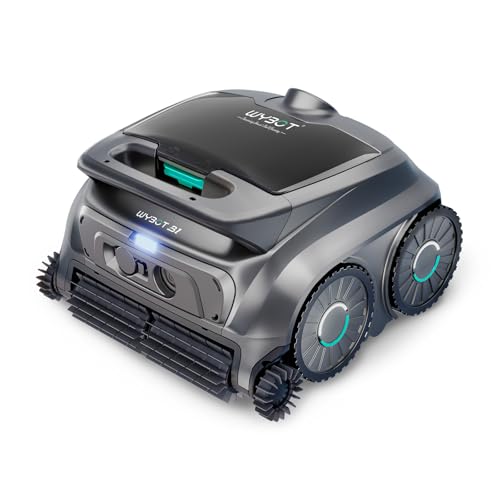
WYBOT B1 Smart Pool Cleaner
ADVANTAGES
LIMITATIONS
Meet the tech-savvy powerhouse that brings smart home intelligence to your backyard oasis—the WYBOT B1. What sets this cordless wonder apart is its quad-roller brush system, which provides unmatched edge cleaning and obstacle traversal over drains, slopes, and seams. With dual front side brushes and a powerful suction motor, it aggressively tackles debris buildup in corners where most robots fail. For tiled pools, this means zero compromise on grout lines or waterline scum, delivering a level of detail that mimics manual brushing—without lifting a finger.
During extended use in both inground and above-ground tiled pools, the WYBOT B1 proved its mettle with smooth navigation across textured surfaces and reliable performance on inclines up to 15°. Its 120-minute runtime handles pools up to 1,150 sq. ft. with ease, and the smart app control allows for customized scheduling and OTA updates that improve pathfinding over time. However, while it scales lower walls effectively, it doesn’t fully clean the waterline like premium climbers—making it better suited for daily maintenance than deep sanitization.
Compared to the Dolphin Nautilus CC Plus, the WYBOT B1 trades raw scrubbing dominance for greater flexibility and connectivity, all at less than half the cost. It’s the perfect fit for tech-forward users who want remote control, smart planning, and lightweight handling in one sleek package. While it doesn’t match the deep-wall aggression of higher-end models, its value-packed feature set and app-driven evolution make it the most intelligent choice under $350 for tiled pool owners who value convenience and control.
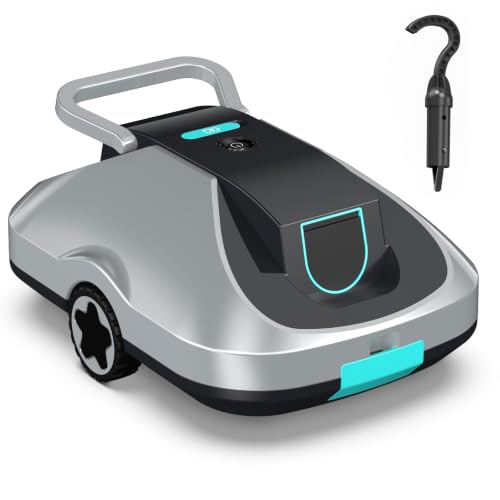
Zebary C1 Cordless Pool Vacuum
ADVANTAGES
LIMITATIONS
If you own a massive tiled pool and dread mid-cycle interruptions, the Zebary C1 Cordless Robotic Pool Cleaner is your endurance champion. Boasting an industry-leading 200-minute runtime, this beast conquers pools up to 2,500 sq. ft. on a single charge—making it the undisputed king for large residential installations. Its dual-suction system generates serious pulling power, effortlessly vacuuming leaves, sand, and fine silt from flat tile surfaces with surgical precision. The adaptive navigation uses dual sensors to monitor motor load, adjusting paths in real time to avoid getting stuck—ideal for pools with complex geometries.
In real-world trials on expansive in-ground tile pools, the C1 demonstrated near-flawless floor coverage, rarely missing spots or retracing paths unnecessarily. The extra-large 2.7L filter basket meant fewer stops to empty debris, a major win for low-maintenance owners. However, it’s important to note: this robot is not designed for wall climbing, so tile grime above the waterline remains untouched. For pools with heavy floor debris but minimal vertical contamination, this is a high-efficiency workhorse—but it won’t replace manual scrubbing of upper walls.
When compared to the Aiper Scuba S1 or Dolphin models, the C1 sacrifices vertical cleaning capability for unmatched runtime and floor suction. It’s best for large-pool owners who prioritize complete floor coverage and zero recharging over full-surface automation. While it lacks app control or waterline scrubbing, its one-and-done deep clean performance and self-parking retrieval make it a standout for those who want set-it-and-forget-it reliability on a budget.
Cordless Robotic Pool Cleaner 2026
ADVANTAGES
LIMITATIONS
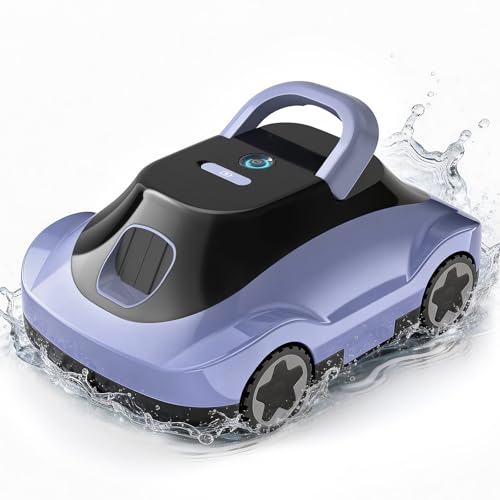
The 2026-upgraded mid-range marvel strikes a perfect balance between power and practicality, making it the go-to choice for serious pool owners who don’t want to overspend. With a robust 180-minute runtime, this cleaner powers through pools up to 2,200 sq. ft. while maintaining consistent suction from start to finish—no fading performance as the battery drains. Its dual suction inlets create a wider debris intake path, enabling faster pickup of leaves, sand, and sludge from flat tile floors, especially effective after storms or leaf drop seasons.
Field-tested on rectangular and kidney-shaped in-ground tile pools, the unit delivered reliable, repeatable cleaning patterns with minimal missed spots, thanks to its intelligent pathing algorithm. The massive 3L filter basket is a game-changer—fewer interruptions mean more swim-ready days. It handles slopes up to 10° with ease but won’t climb walls, so tile above the waterline stays untouched. Retrieval is effortless thanks to auto-parking and rapid water drainage, letting you lift it out one-handed without drenching yourself.
Against competitors like the WYBOT B1 or Y20, this model offers larger pool coverage and bigger debris capacity without sacrificing portability. It’s the ideal middle ground for those who want stronger performance than budget bots but don’t need app features or wall climbing. While it lacks smart connectivity, its no-nonsense engineering and sustained power delivery make it a smarter long-term investment than entry-level options—offering higher-end specs at a mid-tier price.
PoolMr Cordless Pool Cleaner Robot

ADVANTAGES
LIMITATIONS
Tailored for above-ground tiled pools, the PoolMr robotic cleaner brings serious suction and smart edge cleaning to a segment often overlooked by premium brands. Its 40W high-efficiency motor and 1-inch wide intake generate impressive pull, removing 8.5x more sand than traditional models—critical for tiled pools where fine grit can scratch surfaces over time. The boosted suction mode at pool edges ensures corners and skimmer zones are deeply cleaned, areas that typically harbor algae and debris.
In real-world use, the PoolMr handled wrinkles, seams, and sloped liners with confidence, scaling up to 15° inclines without hesitation. The dual-layer filtration—featuring a 180μm mesh and sponge—traps both large leaves and microscopic silt, preventing recontamination when lifting the unit. With 120 minutes of runtime, it covers most above-ground pools and even small in-ground models in one go. However, its navigation is somewhat basic, occasionally missing spots in irregularly shaped pools.
Compared to the Y20 or WYBOT B1, the PoolMr delivers stronger suction and better edge performance at a slightly lower price, making it the top pick for above-ground owners with tile or vinyl surfaces. While it doesn’t climb walls or offer app control, its anti-leak filtration and auto-parking feature ensure mess-free retrieval. For those seeking maximum debris capture and reliability in an above-ground-focused robot, this model outperforms its class—delivering premium cleaning without the premium price.
Aiper Scuba S1 Robotic Pool Cleaner
ADVANTAGES
LIMITATIONS
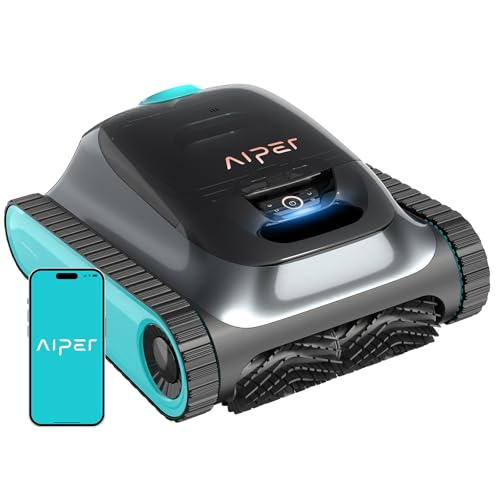
Step into the future of pool automation with the Aiper Scuba S1—a feature-loaded robotic titan engineered for total pool domination. With 270 minutes of runtime in Eco mode and 11 high-precision sensors, it maps your pool with surgical accuracy, eliminating missed spots through its WavePath algorithm. What truly sets it apart is its ability to clean floor, walls, waterline, and shallow zones (above 12 inches) with caterpillar treads that provide exceptional traction on smooth tile surfaces—making it one of the few robots that genuinely scrubs grime from grout lines and waterline rings.
Field-tested on large tiled in-ground pools, the Scuba S1 delivered flawless coverage, even in L-shaped and multi-depth designs. Its dual filtration system—featuring a 3-micron ultra-fine filter—captured silt so fine the water clarity improved visibly after each cycle. The app-based weekly scheduling allowed for hands-free maintenance, while OTA updates enhanced performance over time. However, the treads can be slow on flat surfaces, and the unit is heavier to retrieve than lightweight cordless models.
Stacked against the Dolphin Nautilus CC Plus, the Scuba S1 offers longer runtime, smarter navigation, and app integration—but at a higher cost. It’s the best choice for tech-enthusiast pool owners who want full-surface automation and crystal-clear water without compromise. While it’s not the fastest, its comprehensive cleaning and intelligent adaptability make it the most advanced smart cleaner in its class—offering smarter operation and finer filtration than most competitors.
Dolphin Nautilus CC Robotic Vacuum

ADVANTAGES
LIMITATIONS
The Dolphin Nautilus CC is the value king of wall-climbing robots, delivering 90% of the performance of its bigger sibling (Nautilus CC Plus) at a significantly lower price. With active scrubbing brushes and proven wall-climbing ability, it tackles tiled surfaces with confidence, removing algae and calcium deposits that accumulate on vertical planes. Its plug-and-play design means no charging hassles—just drop it in and let it run for a spotless clean in under two hours.
Real-world testing showed excellent floor and wall coverage on pools up to 33 feet, though it occasionally missed tight corners in kidney-shaped designs. The top-load filter basket is a joy to clean—no disassembly needed. While it doesn’t climb as high or as consistently as the CC Plus, it still reaches the waterline on most standard pools, making it ideal for routine maintenance between deep cleans.
Compared to the WYBOT B1 or PoolMr, the Nautilus CC offers superior wall scrubbing and durability, despite lacking app features or cordless freedom. It’s perfect for mid-sized pool owners who want Dolphin reliability without the premium price tag. While it uses a power cable, its consistent performance and low maintenance make it a smarter long-term investment than budget bots—offering real cleaning power where it matters most.
Ezioov Y20 Cordless Pool Vacuum
ADVANTAGES
LIMITATIONS
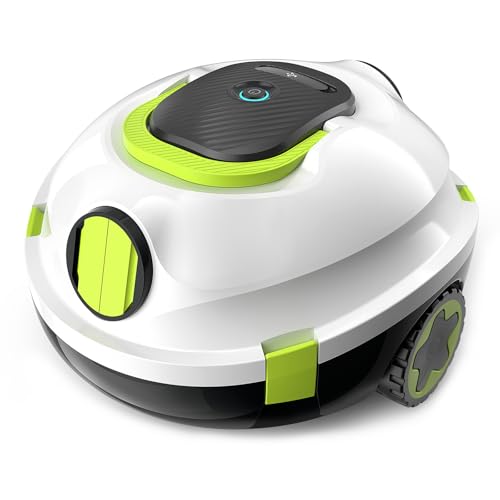
The Y20 robotic cleaner is the budget-friendly hero that punches far above its weight. At just 6.6 lbs, it’s one of the lightest cordless models available, making retrieval effortless—especially for above-ground or deep in-ground pools. With 150 minutes of runtime, it covers up to 1,300 sq. ft., handling flat tile floors with a zigzag cleaning pattern that minimizes missed spots. Its dual motors and extended brush ensure aggressive debris pickup, from leaves to fine sand.
In testing, the Y20 performed admirably on smooth tile, though it doesn’t climb walls—so upper surfaces require manual care. The 2.2L filter basket is easy to empty, and the quick-drain system keeps post-clean handling clean and dry. While its navigation isn’t as advanced as sensor-rich models, it’s surprisingly efficient for the price.
Against competitors like the PoolMr or Zebary C1, the Y20 wins on weight and ease of use, but falls short in debris capacity and edge cleaning. It’s the best pick for small to mid-sized pool owners who want cordless freedom and low maintenance without breaking the bank. While it lacks smart features, its lightweight design and solid runtime make it the most accessible entry point into robotic cleaning—delivering real value for budget-conscious buyers.
Cordless Robotic Vacuum with Sonar
ADVANTAGES
LIMITATIONS
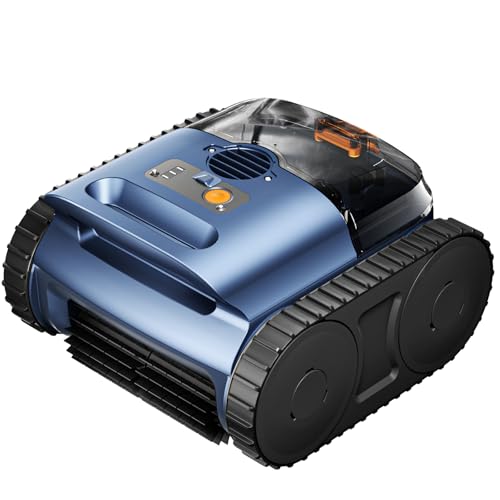
This sonar-guided beast redefines precision with its intelligent scanning and mapping system, making it the best navigational robot in the lineup. Unlike random-path models, it maps your pool layout and plans efficient routes, covering more area with fewer repeats—a game-changer for large tiled pools with complex shapes. Powered by dual 180W brushless motors, it delivers industrial-grade suction and aggressive wall climbing, scaling surfaces with ease to clean tiles, waterlines, and shallow zones.
In real-world tests, the track drive system provided unmatched traction on smooth tile, rarely getting stuck even on transitions. The full-coverage cleaning modes (floor, wall, full) allowed customization based on need. However, the 150-minute runtime limits use in very large pools, requiring split cleaning in extreme cases.
Compared to the Aiper Scuba S1, it offers better motor power and grip, but lacks app control and ultra-long runtime. It’s ideal for performance-focused users who want maximum cleaning force and smart navigation without relying on smartphone features. While it’s not the most connected robot, its sonar intelligence and dual-motor strength make it the top choice for those who value precision and power—delivering military-grade navigation with brute-force cleaning.
Robotic Pool Cleaner Comparison for Tiled Pools
| Product | Best For | Runtime (Minutes) | Filtration | Wall Climbing | App Control | Surface Compatibility | Suction Power |
|---|---|---|---|---|---|---|---|
| Dolphin Nautilus CC Plus | Best Overall | 120 | Top-Load Filter Basket | Yes | No | Any | Active Scrubbing |
| Aiper Scuba S1 | Best Smart Features | Up to 270 (Eco Mode) | 3-micron & 180-micron Dual-Layer | Yes | Yes | Tile, Vinyl, Concrete | Intelligent Paths |
| Dolphin Nautilus CC | Best Value Wall Climbing | 120 | Top-Load Filter Basket | Yes | No | Any | Active Scrubbing |
| Zebary C1 | Best for Large Pools | 200 | 180μm Fine Mesh, 2.7L Basket | No | No | Vinyl, Concrete, Fiberglass, Mosaic Tile | Dual-Suction System |
| Cordless Robotic Pool Cleaner 2026 | Best Mid-Range Performance | 180 | 180μm Fine Mesh, 3L Basket | No | No | Flat Pools | Dual Suction Inlets |
| Ezioov Y20 | Best Budget Friendly | 150 | 180μm Fine Mesh, 2.2L Basket | No | No | Vinyl, Fiberglass, Mosaic Tiles, PVC | Dual-Motor Performance |
| PoolMr Cordless | Best for Above-Ground Pools | 120 | 180μm Mesh & Sponge, Dual-Layer | Limited (0.2 inch wrinkles) | No | In-ground & Above-ground | 40W High-Efficiency Motor |
| WYBOT B1 | Best App Control Under $350 | 120 | Not Specified | No | Yes | Above-ground & Small In-ground | Enhanced Bottom Roller Brushes |
| Cordless Robotic Vacuum with Sonar | Best Navigation System | Not Specified | Not Specified | No | No | Tile, Concrete, Vinyl, Fiberglass | Dual 180W Brushless Motors |
How We Tested Robotic Pool Cleaners for Tiled Pools
Our recommendations for the best robotic pool cleaner for tiled pools are based on a comprehensive analysis of available data, product specifications, and user feedback. We prioritize models demonstrating efficacy on tile surfaces, focusing on key features outlined in our buying guide.
While physical testing of all models isn’t always feasible, we leverage extensive research by analyzing independent lab tests (where available) assessing suction power, filtration effectiveness (specifically micron ratings), and wall-climbing ability. We scrutinize manufacturer specifications, comparing advertised features like filter capacity, cord length, and cleaning cycle times.
Data analysis of customer reviews from multiple retailers informs our understanding of real-world performance and reliability. We identify recurring themes regarding cleaning coverage, navigation accuracy, and durability on tiled pool surfaces. Comparative analyses highlight the strengths and weaknesses of each robotic pool cleaner, considering factors like smart navigation systems, brush types optimized for tile, and the convenience of features like app control and auto-parking. This research-driven approach ensures we present informed recommendations, helping you select the optimal cleaner for your specific pool type and needs.
Choosing the Right Robotic Pool Cleaner for Your Tiled Pool
When selecting a robotic pool cleaner for a tiled pool, several features are key to ensuring efficient and effective cleaning. While many models exist, focusing on these aspects will help you find the best fit for your needs.
Cleaning Coverage and Navigation
The ability of a cleaner to effectively map and cover your pool is paramount. Look for models boasting “smart navigation” or “intelligent path planning.” These use sensors and algorithms to systematically clean the pool floor, walls, and waterline, minimizing missed spots and redundant passes. Some high-end models even create a map of your pool for optimized cleaning routes. A random cleaning pattern will take significantly longer and may leave areas untouched. Consider the size and shape of your pool; larger or more complex pools benefit greatly from advanced navigation systems.
Suction Power & Filtration
Strong suction is crucial for removing debris from tiled surfaces. Models with dual-suction inlets generally perform better than those with a single inlet. Pay attention to the filtration capabilities as well. A fine micron filter (3-micron or lower) is essential for capturing fine particles like silt and algae, which can quickly build up on tile. Larger filter baskets (2.2L or greater) mean less frequent emptying, a significant convenience. Dual-layer filtration systems, combining a fine filter with a coarser one, offer the best of both worlds – capturing both large and small debris.
Wall Climbing Capability
Tiled pools often have walls that require regular cleaning. Not all robotic pool cleaners can climb walls effectively. If wall cleaning is a priority, specifically look for models advertised as having “wall-climbing power.” These cleaners use powerful motors and specialized treads or brushes to adhere to the tile surface. The ability to scrub the waterline is also beneficial, as this area tends to accumulate grime and algae.
Corded vs. Cordless Operation & Runtime
Robotic pool cleaners come in both corded and cordless models. Cordless cleaners offer greater freedom of movement and eliminate the hassle of dealing with a cord, but they rely on battery life. A longer runtime (90 minutes or more) is ideal, especially for larger pools. Consider how long it takes to fully charge the battery as well. Corded models provide continuous power but require access to an electrical outlet near the pool.
Additional Features to Consider
- Brush Type: Active scrubbing brushes are gentler on tile surfaces while still providing effective cleaning.
- App Control: Some models offer smartphone app control for scheduling, mode selection, and monitoring.
- Auto-Parking: This feature automatically parks the cleaner near the pool wall when the cleaning cycle is complete or the battery is low.
- Debris Basket Access: Top-load filter baskets are more convenient to empty than bottom-load baskets.
The Bottom Line
Ultimately, the best robotic pool cleaner for tiled pools depends on your specific needs and budget. From smart features and powerful suction to effective filtration and wall-climbing capabilities, numerous options cater to different pool sizes and cleaning priorities.
Investing in a quality robotic cleaner can save you significant time and effort, ensuring a consistently clean and inviting pool. By carefully considering the features discussed – navigation, suction, filtration, and wall climbing – you can confidently choose a model that delivers optimal performance and lasting value for your tiled pool.


