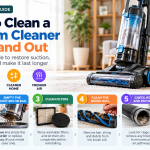


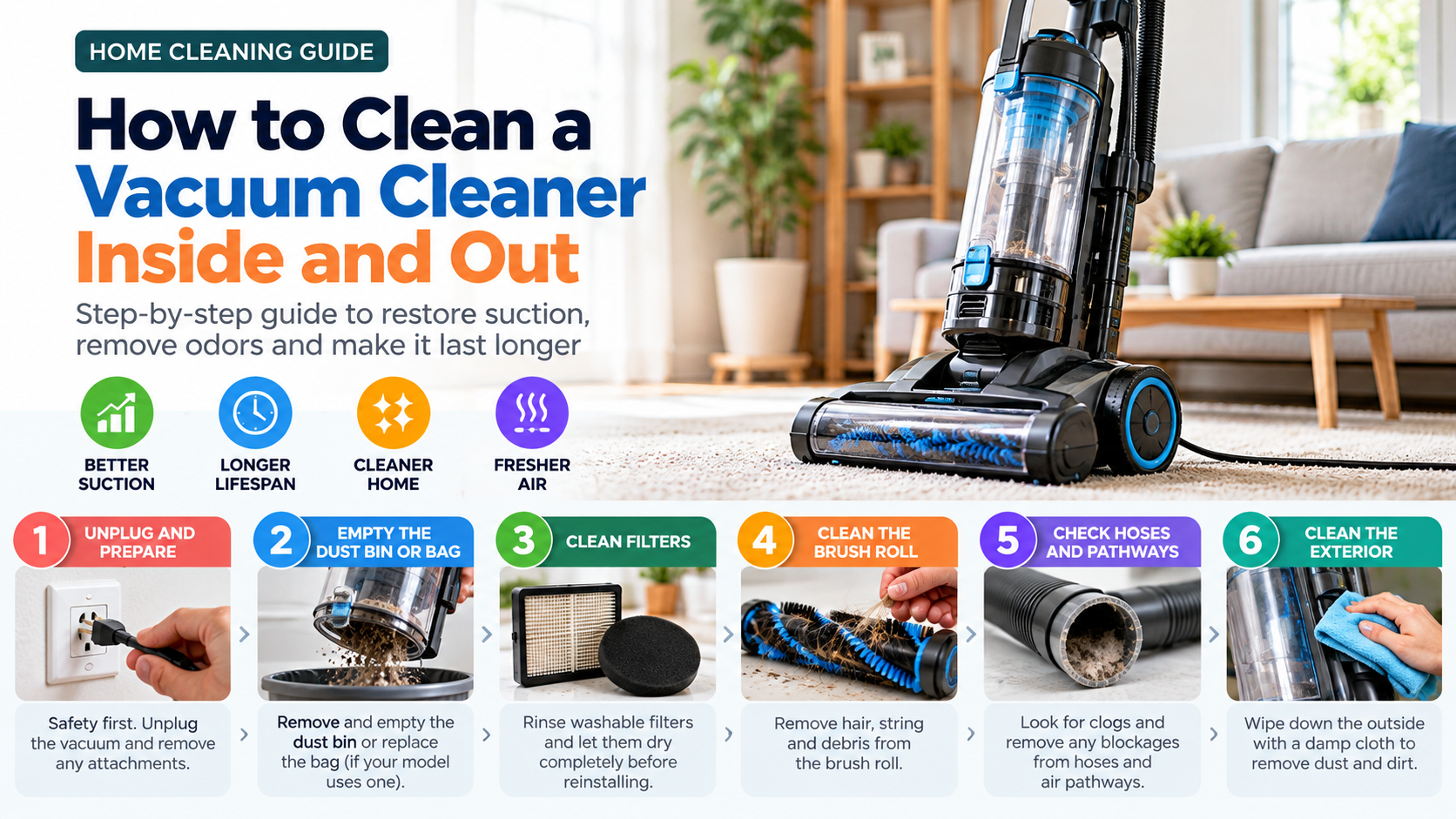

Your vacuum cleaner works hard to keep your home clean, but when did you last clean the vacuum itself? Over time, dust, pet hair, crumbs and debris build up in the bin, filter, brush roll and hose. The result is weaker suction, a musty smell, scattered dust and a motor that works harder than it should.
The good news is that learning how to clean a vacuum cleaner inside and out is easy, inexpensive and takes less than an hour. This complete guide walks you through every part, from the dust bin and filters to the brush roll, hose and exterior, plus a cleaning schedule, odor fixes and common mistakes to avoid.
Why You Should Clean Your Vacuum Cleaner Regularly
A dirty vacuum cannot clean well. Regular maintenance gives you several important benefits:
- Stronger suction: Clogged filters and full bins restrict airflow, which is the most common cause of weak suction.
- Better air quality: A clean filter traps fine dust and allergens instead of blowing them back into your room.
- Fewer odors: Trapped pet hair, food crumbs and damp dust can create an unpleasant smell every time you vacuum.
- Longer motor life: Good airflow keeps the motor cool, which helps prevent overheating and early failure.
- Saves money: Regular care can delay repairs and the need to buy a replacement.
- Better results on floors and carpets: A free-spinning brush roll lifts dirt much more effectively.
Signs Your Vacuum Cleaner Needs Cleaning
- Suction feels weaker than usual
- A burning or musty smell comes from the machine
- Dust escapes from the bin or exhaust
- The brush roll spins slowly or stops
- The vacuum overheats or shuts itself off
- Hair and threads are wrapped around the brush
- Visible dirt on the filter, bin or hose
What You Need Before You Start
You do not need special equipment. Gather these common household items:
- A trash bag or an outdoor trash can
- Scissors or a seam ripper
- A soft brush or old toothbrush
- Microfiber cloths
- Mild dish soap and warm water
- A long, thin object such as a broom handle to check the hose
- Baking soda or white vinegar for odor control (optional)
- A screwdriver if your model needs one to open the brush roll cover
- Disposable gloves and a dust mask (optional but helpful)
Safety First: Before You Begin
- Turn off and unplug the vacuum. For cordless models, remove the battery if it can be removed.
- Read the manual. Every model is different, and it will tell you which parts are washable.
- Never submerge the motor, battery or any electrical part in water.
- Work in a well-ventilated area, preferably outdoors or near an open window, because fine dust will fly around.

How to Clean a Vacuum Cleaner Inside
The inside of the vacuum is where dirt collects and airflow gets blocked. Work through these parts in order.
Step 1: Empty the Dust Bin or Replace the Bag
Bagless vacuums: Hold the bin over a trash bag and release the latch slowly so dust does not billow out. Pull out any hair or debris stuck in the opening, then wipe the inside of the bin with a dry or slightly damp cloth. If the bin is washable, rinse it with warm water and a little mild soap, then let it dry completely before putting it back.
Bagged vacuums: Replace the bag when it is about two-thirds full. A very full bag reduces suction because air cannot pass through it freely. Always use the bag type recommended by the manufacturer.
Step 2: Clean or Replace the Filters
Filters are the most important part to maintain. Most vacuums use one or more of these types:
- Foam filters: Usually washable. Rinse under cold running water, squeeze gently until the water runs clear, and let it air dry.
- Felt or fabric filters: Often washable too. Check your manual first.
- Pleated paper or HEPA filters: Many are not washable. Tap them gently over a trash can to remove loose dust and replace them according to the manufacturer.
- Exhaust or post-motor filters: These clean the air before it leaves the vacuum and should be checked and cleaned or replaced on the same schedule.
How to Wash a Vacuum Filter Properly
- Remove the filter and tap it over a trash bag to knock out loose dust.
- Rinse it under cold running water. Do not use soap, which can leave residue and clog the material.
- Gently squeeze foam filters until the water runs clear.
- Shake off excess water and leave the filter to air dry for at least 24 hours (some manufacturers recommend up to 48 hours in humid weather).
- Reinstall only when it is completely dry.
Important: Never put a damp filter back in the vacuum, and do not dry filters with a hair dryer, oven or direct heat. A wet filter can cause mold, bad smells and motor damage, and heat can warp the material.
Step 3: Clear the Brush Roll
The brush roll (also called the beater bar or roller) agitates carpet fibers to loosen dirt. Hair, string and carpet fuzz wrap around it and make it spin slowly or stop.
- Turn the vacuum over or tilt it back so you can see the brush head.
- Remove the cover plate or take the brush roll out if your model allows it.
- Use scissors or a seam ripper to carefully cut through the tangled hair and threads, then pull them away.
- Wipe the bristles and the housing with a cloth.
- Check the bearings and end caps. Spin the brush by hand and make sure it moves freely.
- Reattach the brush roll and cover securely.
If your vacuum is belt-driven, also inspect the belt. A stretched, cracked or loose belt means the brush will not spin properly, and it should be replaced.

Step 4: Clean the Hose and Attachments
Clogs often hide in the hose or the narrow neck where the hose meets the body.
- Detach the hose and look through it toward a light source to check for blockages.
- If something is stuck, gently push it out with a broom handle or a long, flexible tool. Do not use sharp objects that could puncture the hose.
- Flush the hose with lukewarm water if the manufacturer allows it, then hang it up to dry fully.
- Wash tools such as the crevice tool, dusting brush and upholstery nozzle in warm soapy water, then dry them.
Step 5: Check the Airflow Path and Seals
Look at the openings, ducts and rubber seals where air travels from the floor head to the bin. Remove any debris you find and wipe rubber seals clean. Worn or cracked seals leak air and lower suction, so replace them if needed.
How to Clean a Vacuum Cleaner Outside
The outside of your vacuum touches floors, carpets and your hands, so it picks up grime, pet hair and fingerprints.
Step 6: Wipe the Body and Handle
- Dampen a microfiber cloth with warm water and a few drops of mild dish soap. Wring it out well so it is damp, not dripping.
- Wipe the plastic body, handle, hose cuff and buttons.
- Use a soft brush or an old toothbrush to clean vents, seams and tight corners.
- Dry the surfaces with a clean cloth.
For a sanitized finish, wipe high-touch areas like the handle and switch with a disinfecting wipe suitable for plastic, but check the manual first.
Step 7: Clean the Wheels and Base Plate
Hair and fluff wrap around the wheel axles and can make the vacuum hard to push. Pull away the tangles with scissors or tweezers, wipe the wheels and clean the underside of the base plate, including the glide strips.
Step 8: Wipe the Power Cord
Run the cord through a slightly damp cloth to remove dust and dirt as you wind it up. Check for cuts, frays or exposed wires. A damaged cord should be replaced by a qualified technician.
How to Get Rid of Bad Smells in a Vacuum Cleaner
If your vacuum still smells after cleaning, try these simple fixes:
- Wash the bin and filter thoroughly and make sure they are fully dry.
- Use baking soda: Sprinkle a little on a carpet before vacuuming, or place a small amount in the dry bin to absorb odors.
- Wipe with diluted white vinegar: Use equal parts vinegar and water on a cloth to wipe the inside of the bin and hose. Let it dry fully.
- Replace the filter or bag: A filter that has absorbed odors may need replacing.
- Avoid vacuuming damp messes: Wet debris leads to mold and smells unless your vacuum is designed for wet pickup.
- Check for hidden debris: A rotting crumb or dead insect lodged in the hose can cause a strong smell.
Cleaning Different Types of Vacuum Cleaners
Upright Vacuum Cleaners
Focus on the brush roll, the belt and the base plate where hair collects. Empty the bin after each use and check the hose behind the machine for clogs.
Canister Vacuum Cleaners
Clean the floor head brush, the telescopic wand and the flexible hose. Empty the canister or replace the bag regularly, and check the filters beneath the lid.
Stick and Cordless Vacuum Cleaners
These have small bins that fill quickly, so empty them after every use. Rinse washable filters monthly and remove hair from the brush bar. Keep the battery contacts clean and dry, and never wash the battery.
Robot Vacuum Cleaners
Empty the bin after each run, clean the side brushes and main brush weekly, wipe the sensors and charging contacts with a dry cloth, and wash or replace the filter on the maker’s schedule.
Handheld Vacuum Cleaners
Empty the dust cup after every use and tap or rinse the filter often, because small units lose suction quickly when they are full.
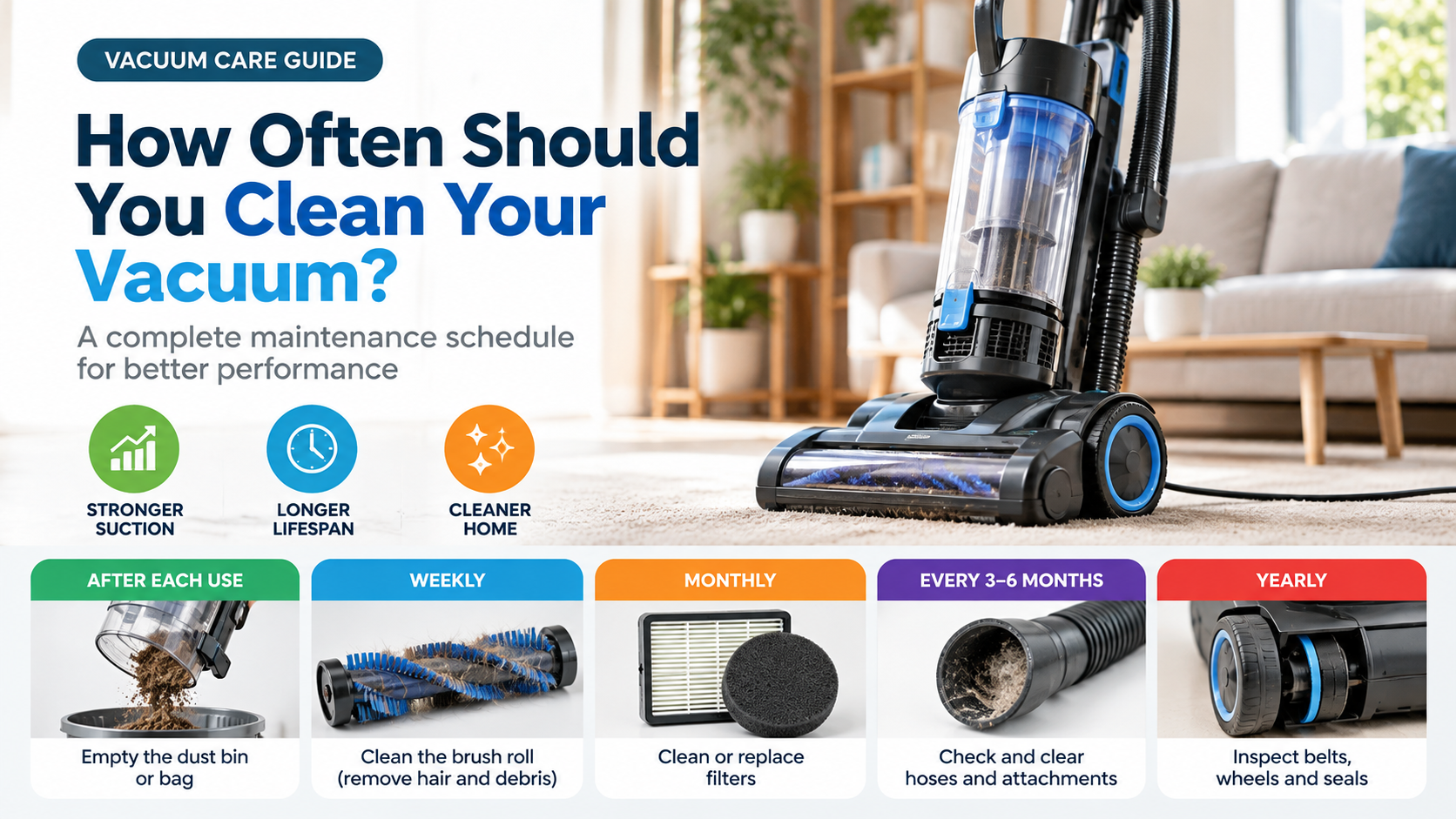
How Often Should You Clean Your Vacuum Cleaner?
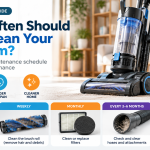
The right schedule depends on how often you vacuum and whether you have pets, children or allergies. Use the table below as a general guide, and clean more often if you have shedding pets or heavy carpets.

| Part | How Often | What to Do |
|---|---|---|
| Dust bin or bag | After every use (or when two-thirds full) | Empty and wipe the bin; replace bags when needed |
| Washable filter | Every 1 to 3 months | Rinse with cold water and dry for at least 24 hours |
| HEPA or sealed filter | Tap clean monthly; replace every 6 to 12 months | Do not wash unless the manual says it is washable |
| Brush roll | Monthly, or when hair builds up | Cut away hair and threads, wipe the bristles |
| Hose and attachments | Every 3 months | Check for blockages and wash the tools |
| Exterior body and wheels | Weekly | Wipe with a damp microfiber cloth |
Common Mistakes to Avoid
- Cleaning while plugged in. Always unplug first.
- Reinstalling a damp filter. Allow a full 24 hours of drying time.
- Using soap on filters. Rinse with plain cold water only.
- Washing a non-washable filter. This can ruin HEPA and paper filters.
- Letting the bin overfill. Empty it before it reaches the max line.
- Ignoring the brush roll. Tangled hair strains the motor and belt.
- Soaking electrical parts. Keep water away from the motor and battery.
- Using sharp tools in the hose. They can puncture or damage it.
- Skipping the manual. Instructions differ between models and brands.
Tips to Keep Your Vacuum Cleaner Cleaner for Longer
- Empty the bin after every use or at least before it is full.
- Keep a spare filter so you can swap one in while the other dries.
- Pick up large debris like paper clips, coins and string before vacuuming.
- Use the right height setting for your floor type.
- Do not vacuum wet spills, ash or fine powders such as plaster or flour unless the vacuum is built for it.
- Store the vacuum in a dry place, away from damp basements or garages.
- Replace worn belts, filters, seals and brush rolls on time.
- Do a quick wipe-down and brush check once a week.
When to Replace Parts or the Whole Vacuum
Cleaning solves most performance problems, but some parts wear out. Replace the filter if it stays dirty after washing, the belt if it is loose or cracked, and the brush roll if the bristles are worn flat. If your vacuum has lost suction even after a thorough cleaning, a motor problem or cracked housing may be the cause. When repair costs approach the price of a new machine, replacing the vacuum is usually the better choice.
When shopping for a new vacuum, look for washable filters, a large and easy-to-empty bin, a tangle-resistant brush roll, a simple design with easy-access parts, and easily available replacement filters and belts. These features make routine cleaning faster and far less messy.
Frequently Asked Questions
How often should I clean my vacuum cleaner?
Empty the bin after every use, clean the brush roll and wash the filter about once a month, and wipe down the exterior weekly. Homes with pets or heavy use may need more frequent cleaning.
Can I wash my vacuum cleaner with water?
Only the parts the manufacturer marks as washable, such as many bins, foam filters and attachments. Never put the motor, battery or electrical parts in water.
How do I know if my vacuum filter is washable?
Check the manual or look for a washable symbol on the filter. Foam and some felt filters can usually be rinsed, while paper and many HEPA filters cannot.
Why does my vacuum smell bad?
Smells usually come from a dirty or damp filter, a full bin, trapped pet hair or something rotting in the hose. Cleaning and fully drying these parts normally fixes the problem.
Why has my vacuum lost suction after cleaning?
Check that the filter is correctly seated, the bin is locked in, and there is no hidden clog in the hose or airflow path. A worn seal or a damaged filter can also reduce suction.
How do I clean a vacuum hose?
Detach it, look through it for blockages, push out stuck debris gently with a broom handle, rinse if allowed, and hang it up until completely dry.
How long does a vacuum filter last?
Most filters last 6 to 12 months, depending on use and type. Replace it sooner if it is damaged, discolored, or still smells after washing.
Can I use vinegar to clean my vacuum cleaner?
Yes. A diluted vinegar and water solution on a cloth helps remove odors and grime from the bin and plastic surfaces. Do not soak electrical parts, and let everything dry fully.
Is it safe to use a vacuum with a dirty filter?
It works, but poorly. A clogged filter lowers suction, forces the motor to work harder and can release fine dust back into the air.
Final Thoughts
Knowing how to clean a vacuum cleaner inside and out is one of the simplest ways to keep your home cleaner and your machine running like new. Empty the bin, wash or replace the filters, cut away hair from the brush roll, clear the hose and wipe down the exterior on a regular schedule, and you will notice stronger suction, fresher air and a longer-lasting vacuum.
Make cleaning your vacuum part of your normal cleaning routine. A few minutes each week saves you time, money and frustration in the long run.