



Most people clean their floors far more often than they clean the machine that does the cleaning. Then one day the suction drops, a musty smell comes out of the exhaust, and the vacuum starts leaving dust behind. A dirty vacuum cannot clean well, and neglect can shorten its life.
So, how often should you clean your vacuum? This guide gives you a simple schedule for the dustbin, brush roll, filters, hose and body, plus adjustments for pets, allergies and robot vacuums.
Quick answer
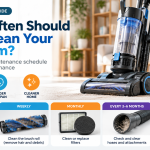
Empty the dustbin or check the bag after every use. Clear the brush roll every 1-2 weeks. Rinse a washable filter every 1-3 months and replace filters every 6-12 months. Do a full check of the hose, wand and attachments once a month. Clean more often if you have pets, allergies or a busy household.
Why Cleaning Your Vacuum Matters
- Stronger suction. Full bins, clogged filters and tangled brushes cut airflow, and airflow is what picks up dirt.
- A longer-lasting machine. A motor that has to work against clogs runs hotter and wears out sooner.
- Cleaner air. A blocked or worn filter can let fine dust back into the room.
- No bad smells. Trapped dust, pet hair and damp debris can make a vacuum smell musty.
- Better value. Basic upkeep costs very little compared with replacing a vacuum early.
A Simple Vacuum Cleaning Schedule
The timing below is typical guidance for most upright, canister and stick vacuums. Your model may differ, so keep the manual handy.

| How often | What to do | Why it matters |
|---|---|---|
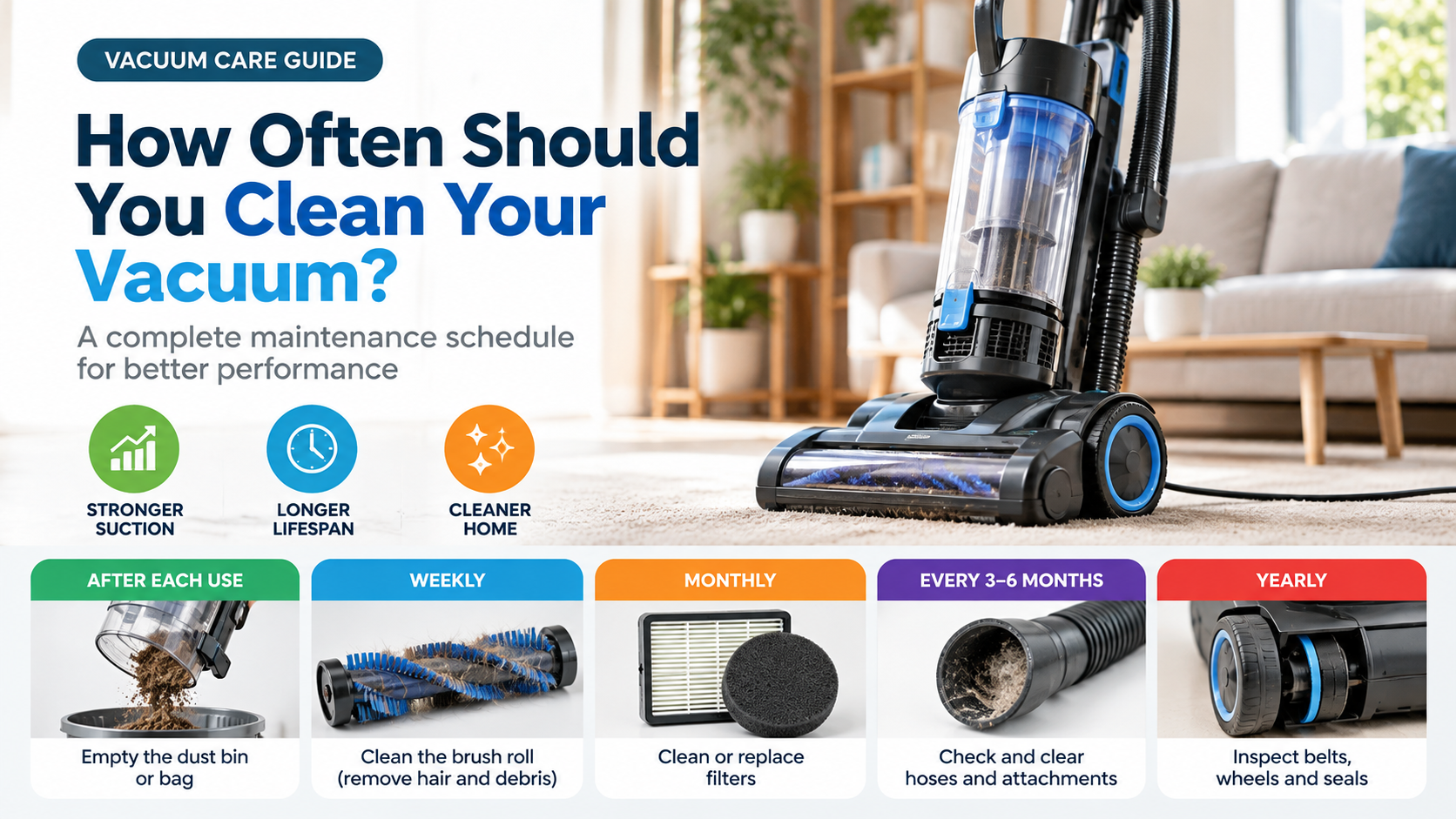
| After every use | Empty the dustbin or check the bag | Keeps suction strong and stops odors |
| Every 1-2 weeks | Cut hair and threads off the brush roll | Prevents tangles that slow the brush |
| Every month | Wipe the body and attachments, check the hose and wand for clogs | Finds blockages before they hurt suction |
| Every 1-3 months | Rinse a washable filter and let it dry fully | Restores airflow |
| Every 6-12 months | Replace filters and worn brush rolls | Keeps the machine efficient |
How Often to Clean Each Part of Your Vacuum
Dustbin or bag: after every use
Bagless vacuums should be emptied after each use, or at the very latest when the dust reaches the max line. A full bin reduces airflow right away. If your vacuum uses bags, replace the bag when it is about two-thirds full. Bags that are packed to the top clog the pores in the bag and lower suction.
Tip: empty the bin into a trash bag outdoors if anyone in your home is sensitive to dust.
Brush roll: every 1-2 weeks
Hair, string and carpet fibers wrap around the brush roll and slow it down. Check it every week or two. Use scissors or a seam ripper to cut the tangles, then pull them away. If your household has long hair or pets, check it weekly. Replace the brush roll when the bristles look worn down or it no longer spins freely, often every 6-12 months.
Filters: every 1-3 months to rinse, 6-12 months to replace
Filters trap the fine dust that the vacuum picks up, so they clog first. Check the label to see which type you have:
- Washable foam or felt filters. Rinse under cool water every 1-3 months. Let it air dry for at least 24 hours before putting it back. Never use a damp filter.
- HEPA filters. Many are not washable. Tap off loose dust gently and replace them about every 6-12 months, or as your manual says.
- Pre-motor and post-motor filters. Some machines have both. Check each one.
Hose, wand and attachments: monthly
Clogs often hide in the hose or wand. Once a month, detach them and look through to check for blockages. Drop a coin or a small ball through the hose to see if it passes. Wipe attachments with a damp cloth and let them dry.
Body, wheels and cord: monthly
Wipe the outside with a slightly damp microfiber cloth. Clean the wheels, which can pick up hair and dirt, and check the cord for damage. Never put electrical parts in water.
Floor head and sensors: monthly
Remove debris from around the floor head and check that the brush bar opening is clear. On vacuums with sensors, wipe them gently with a dry cloth.
5 Signs Your Vacuum Needs Cleaning Right Now
Do not wait for the calendar if your machine is telling you something is wrong.

- Weak suction: You have to make several passes to pick up debris.
- A bad smell: A musty or burning odor usually means trapped dust or a clogged filter.
- Dust blowing out: Fine dust leaves through the exhaust when filters are full or damaged.
- Rattling or loud noise: A blockage or a jammed brush roll is often the cause.
- Overheating: Many vacuums cut out automatically when the motor gets too hot because of poor airflow.
Cleaning Frequency by Household Type
The schedule above suits an average home. If your situation is different, adjust it.

- Homes with pets: Pet hair fills bins and tangles brushes faster. Empty the bin after each use and check the brush roll weekly.
- Allergy-prone households: Clean filters more often, replace HEPA filters on schedule, and empty the bin outdoors.
- Large homes or heavy use: If you vacuum several times a week, check the bin and brush more often.
- Robot vacuums: Empty the bin after every run, clean the brushes weekly, wipe sensors monthly, and replace filters about every 2-3 months. Wash mop pads after each use.
How to Deep Clean Your Vacuum Step by Step
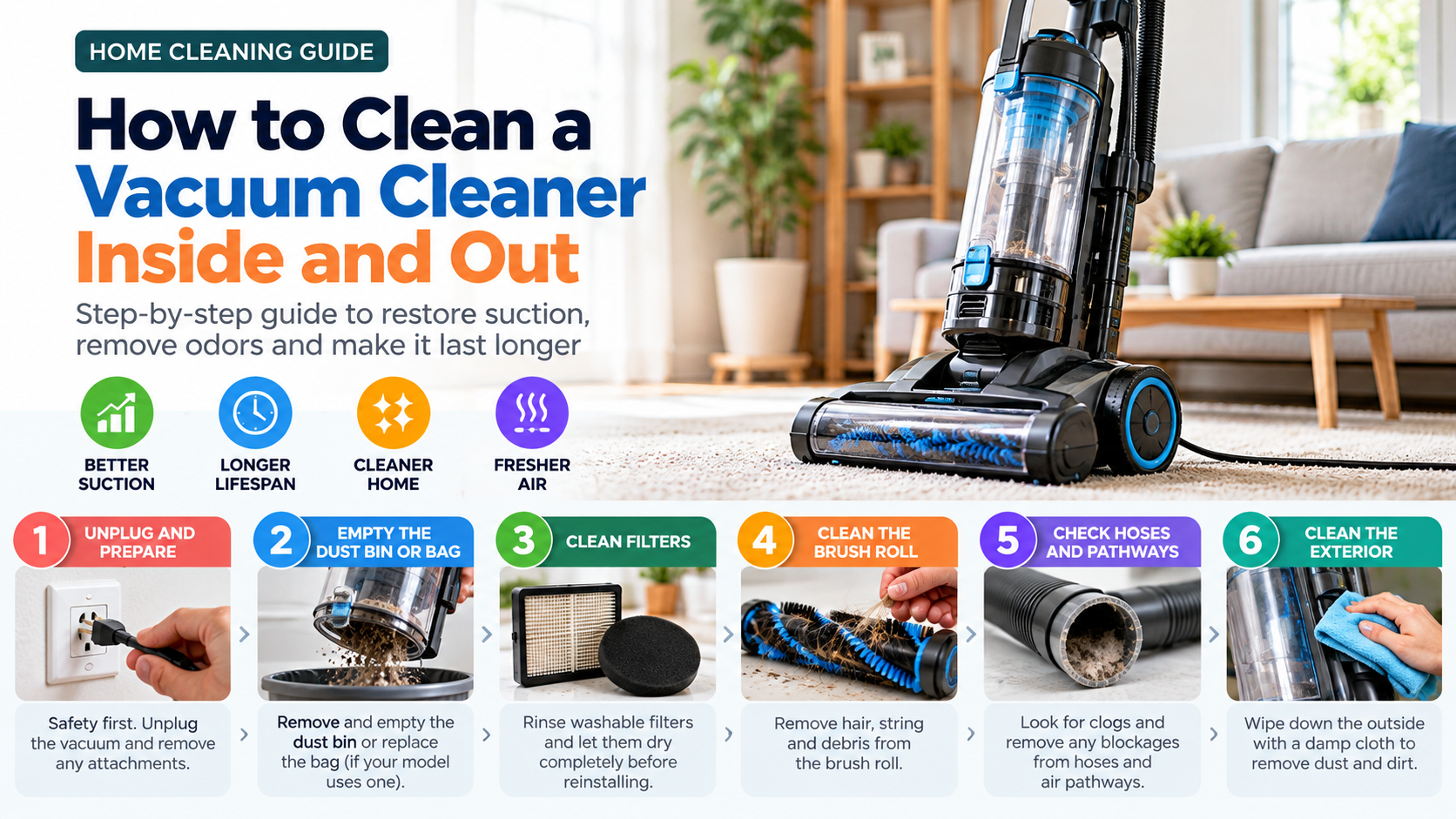
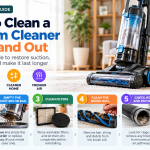
- Unplug it. For cordless models, remove the battery or switch the power off.
- Empty the dustbin or bag into a trash bag and wipe the bin with a dry or slightly damp cloth.
- Remove and tap the filters. Rinse washable ones in cool water with no soap, squeeze gently and let them dry for 24 hours.
- Clear the brush roll. Cut away hair and threads, and wipe the bristles.
- Check the hose and wand for clogs. Use a long, blunt tool such as a wooden spoon handle to push stubborn blockages out.
- Wipe the body, attachments and wheels with a microfiber cloth.
- Reassemble only when everything is dry, then test the suction.
Helpful Tools and Supplies to Keep on Hand
A few inexpensive items make vacuum upkeep faster and easier:
- Small scissors or a seam ripper for cutting hair off the brush roll
- A soft detail brush for dusty crevices and sensors
- Microfiber cloths for wiping the body and attachments
- Replacement filters made for your exact vacuum model
- Spare vacuum bags, if your machine uses them
- A spare brush roll for models where it wears out quickly
Always choose filters and parts that match your model number, because poorly fitting parts can reduce suction and let dust bypass the filter.
Common Mistakes to Avoid
- Letting the dustbin stay full for days
- Putting a damp filter back in the vacuum
- Using soap or a dishwasher on filters unless the manual says it is safe
- Ignoring hair wrapped around the brush roll
- Using filters that do not fit your model
- Vacuuming up wet messes, fine ash or drywall dust with a standard household vacuum
Frequently Asked Questions
How often should I empty my vacuum?
After every use is best. At the very least, empty it when it reaches the max fill line. For bagged vacuums, change the bag when it is about two-thirds full.
How often should I replace my vacuum filter?
Most filters should be replaced every 6-12 months, or sooner with pets or allergies. Washable filters can last longer if they are cleaned and dried properly, but follow the manual.
How often should I clean the brush roll?
Check it every 1-2 weeks, or weekly if you have long hair or pets in the home.
Why does my vacuum smell bad?
The usual causes are a full dustbin, a dirty or damp filter, or trapped pet hair. Empty the bin, clean the filter and let all parts dry fully.
Can I wash my vacuum filter?
Only if the label says it is washable. Use cool water and no soap, and let the filter dry for at least 24 hours. Many HEPA filters should be replaced rather than washed.
How often should I clean a robot vacuum?
Empty the bin after each run, clean the brushes weekly, wipe sensors and charging contacts monthly, and replace filters on the schedule in your manual.
Does cleaning my vacuum improve suction?
Yes. Clearing clogs, emptying the bin and cleaning filters are the three fastest ways to restore suction.
Final Thoughts
The best answer to how often you should clean your vacuum is to build the habit into your routine: empty it after every use, clear the brush roll every week or two, wash filters every one to three months and replace parts once or twice a year. Pet owners and allergy sufferers should clean more often. A few minutes of upkeep keeps suction strong, your air cleaner and your vacuum working for years.
This article is general guidance. Always follow the cleaning and safety instructions in your vacuum cleaner manual.